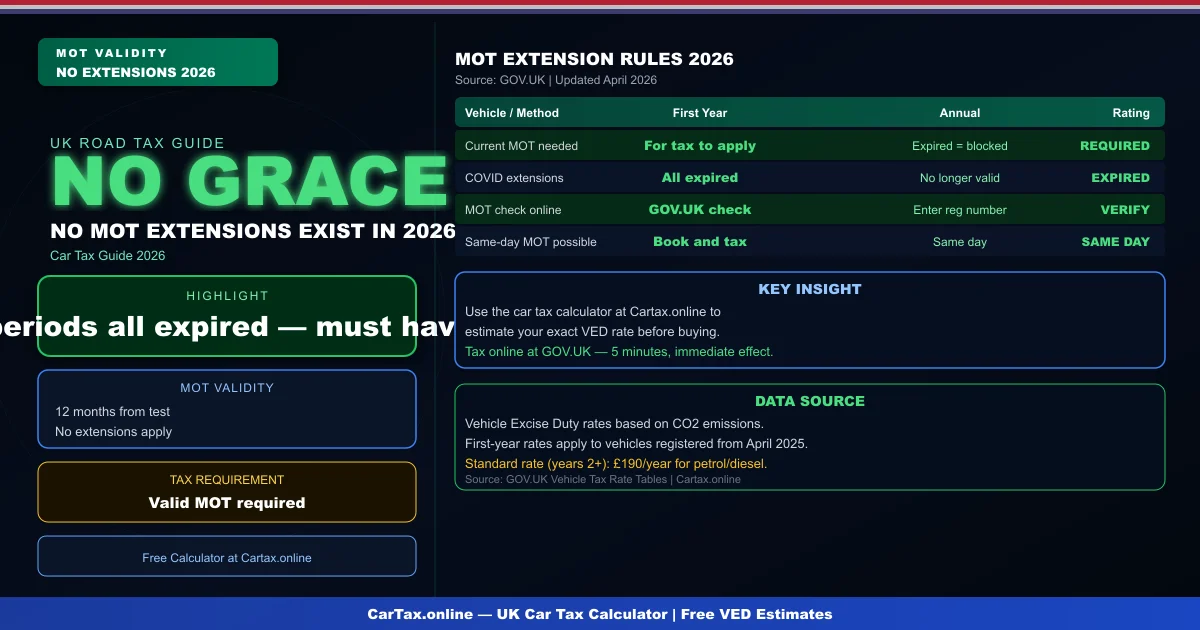
MOT extensions were introduced during the pandemic to help drivers whose tests were delayed. Understanding what happens to your road tax during an MOT extension ensures you stay legal on the road.
What the MOT Extension Means
If your MOT was extended during the pandemic period or due to a testing backlog, your MOT certificate validity was extended by up to six months — meaning the expiry date on your certificate was pushed back. However, this does not automatically extend your road tax. Your VED expiry date is independent of your MOT expiry date. If your road tax expired before your extended MOT, you needed to renew the tax regardless of the MOT extension.
VED and MOT Are Independent
Road tax and MOT are two separate legal requirements. You cannot tax a vehicle without a valid MOT — but the MOT can be valid while your road tax has expired. Conversely, if you have an MOT extension and your tax is still valid, you are legal to drive. When renewing road tax, DVLA checks your MOT status. If the MOT is expired or failed, the system blocks tax renewal until the MOT is passed.
Renewing Tax During an MOT Extension
If your MOT has been extended and you are renewing road tax, the system will accept the extended MOT date as valid. DVLA's records reflect the extended MOT expiry date. Ensure your MOT certificate shows the correct extended date — if there is any discrepancy between your physical certificate and DVLA's digital records, contact the DVLA. Related: Car Tax During MOT Extension UK 2026 | Car Tax and MOT Extension UK 2026 | Car Tax and MOT Extension UK 2026 | Car Tax and MOT Testing UK 2026.
What Happens When the Extension Ends
When your MOT extension period ends, you must get a fresh MOT test. A vehicle without a valid MOT cannot be taxed — so book your new MOT test before the extension expiry date. Failure to book in time means the vehicle becomes illegal to drive and cannot be taxed. Use the car tax calculator at Cartax.online to check the VED rate while planning your MOT renewal.
Roadside Checks and Extensions
Police ANPR cameras and roadside checks can identify vehicles with expired MOTs. A vehicle driving with an expired MOT — even if the extension was previously valid — faces a fixed penalty and can be clamped. If you are unsure whether your extension is still active, check your MOT certificate against the date on GOV.UK's MOT status check.
Frequently Asked Questions
Q: How much is car tax (VED) in the UK 2026?
Car tax rates in the UK depend on your vehicle's CO2 emissions and list price. Standard rates start from £190 per year for petrol and diesel cars, with zero-rated VED for EVs. First-year rates vary from £0 to £2,605 depending on emissions. Additional premiums apply for vehicles over £40,000.
Q: How do I check if my car is taxed online?
You can check your vehicle's tax status for free on the Gov.uk website at gov.uk/check-vehicle-tax. You'll need your vehicle's registration number (number plate). You can also check via the Motor Insurance Database to verify road tax and insurance status simultaneously.
Q: Can I get a refund on car tax if I sell my vehicle?
Yes — if you sell or scrap your vehicle, you can claim a refund on any full months of remaining road tax. Contact DVLA with the V11 reminder letter or apply online at gov.uk. Refunds are usually processed within 4-6 weeks.
Q: Is road tax refund available when transferring ownership?
No — road tax does not transfer with the vehicle. When you sell your car, the tax is automatically cancelled and any remaining months are refunded to you by DVLA. The new owner must tax the vehicle immediately. As a buyer, always verify the vehicle's tax status before purchasing.
Q: What is the luxury car tax threshold in the UK 2026?
The additional rate for vehicles over £40,000 (list price) adds £410 per year to standard VED rates for years 2-6 of registration. This surcharge brings the annual cost for high-emission vehicles over £40,000 to around £600-690 per year. Pure EVs under £40,000 pay zero VED.