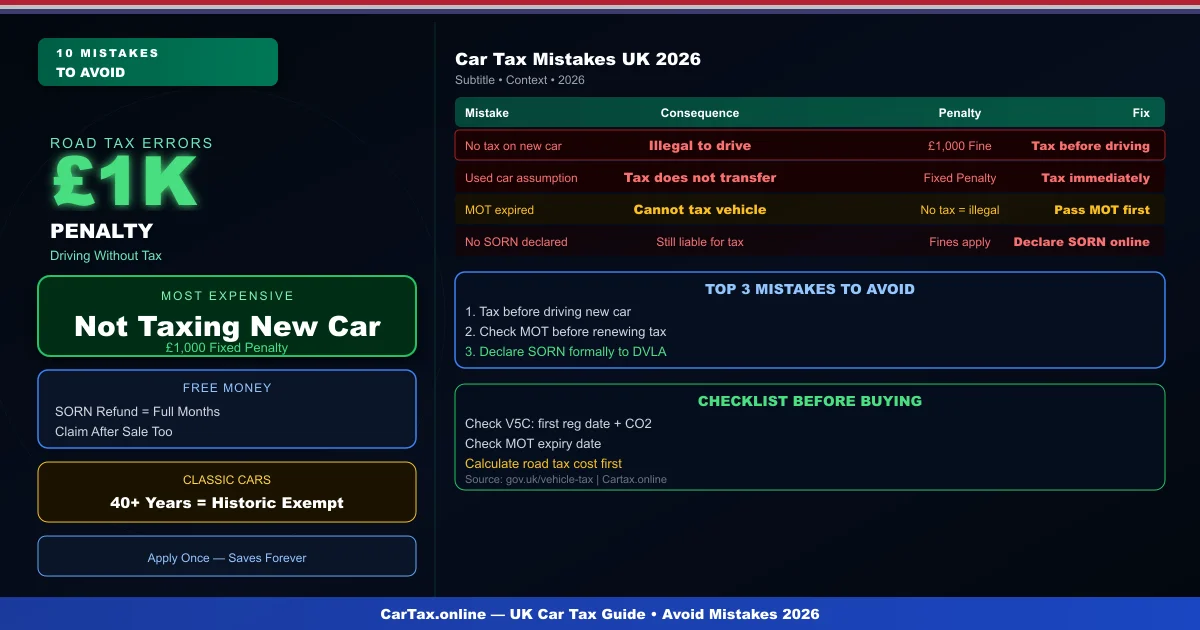
Road tax mistakes can be expensive — from inadvertent overpayments to fixed penalty fines for driving without tax. Here are ten of the most common road tax errors UK drivers make, and how to avoid them.
Mistake 1: Forgetting to Tax a New Purchase
Many new car buyers assume they can drive home from the dealership and sort out road tax later. This is illegal. You must tax the vehicle before driving it on a public road, even for a short distance. Driving without tax — even immediately after purchase — carries a fixed penalty of £1,000 and potential court prosecution. Always tax the vehicle before you drive it home. Many dealers will arrange this for you — confirm before you leave.
Mistake 2: Assuming Tax Transfers When You Buy Used
Road tax does not transfer between keepers. When you buy a used car, the previous owner's tax ends when they notify DVLA of the sale. The new keeper must tax the vehicle from scratch. Some buyers are caught out when they drive away from the seller's home in an untaxed vehicle, believing they have inherited the tax. There is no inheritance of road tax — you start from zero.
Mistake 3: Not Claiming Back Unused Months
When a vehicle is off the road and declared SORN, you can claim a refund for any full months of unused road tax. Many drivers forget to claim this refund or do not realise it is possible. Apply to DVLA with the V5C and the SORN declaration — refunds are processed automatically for SORN periods. Similarly, if you sell a vehicle mid-tax-period, you can claim a refund for remaining full months. Related: Car Tax Mistakes UK 2026 | Avoid This Common Car Tax Error That Costs GBP1K | Car Tax Renewal UK 2026 | Car Tax Fine UK 2026.
Mistake 4: Missing the MOT Connection
You cannot tax a vehicle over three years old without a valid MOT certificate. Many drivers learn this the hard way when they try to renew road tax and discover their MOT has expired. Set a reminder at least one month before your MOT expires. DVLA sends a reminder letter, but it is easy to miss. Driving with an expired MOT is also an offence — even if you are just parking outside the MOT station.
Mistake 5: Ignoring the Expensive Car Supplement
Vehicles with a list price over £40,000 pay an additional road tax rate of £355 per year in the standard rate years. This applies from year two onwards. Many buyers of premium vehicles — BMWs, Audis, Mercedes — are surprised by this charge because it is not always highlighted at point of sale. The charge applies for five years from the second year of registration. Budget for it when considering the total cost of a premium vehicle.
Mistake 6: Not Checking CO2 Emissions Before Buying
The single biggest determinant of road tax is CO2 emissions — and many buyers focus on fuel economy or performance without checking the emissions figure. A high-performance diesel SUV can cost £2,605 in the first year alone. Always check the CO2 figure on the V5C before buying a used car, and ask the dealer for the official figure for a new car. Use our car tax calculator to see the annual cost before you commit.
Mistake 7: Driving on a SORN Without Notifying DVLA
You must formally declare a SORN to DVLA — it is not automatic just because the vehicle is off the road. Without a formal SORN declaration, DVLA assumes the vehicle is still taxable and you are liable for road tax. The SORN declaration can be made online or by phone. Until it is registered, the vehicle is technically still subject to road tax — and if it is found on a public road, you face penalties.
Mistake 8: Failing to Cancel Tax When Vehicle Is Scrapped
When a vehicle is scrapped at an Authorised Treatment Facility (ATF), the ATF notifies DVLA electronically. However, if scrapping occurs informally — sold to a scrap dealer without an ATF — the DVLA notification may not happen. In this case, the keeper is responsible for notifying DVLA. Failing to do so means you remain the registered keeper and liable for road tax even after the vehicle is gone.
Mistake 9: Assuming Diesel Cars Are Always More Tax-Efficient
Diesel cars once offered road tax advantages over petrol — but these have been removed. Diesel cars now pay a supplement on the first-year VED rate. While diesel cars may offer better fuel economy, the first-year tax supplement and higher repair costs can offset the fuel savings over a typical three-year ownership period. Always calculate the lifetime road tax cost alongside fuel economy before choosing between diesel and petrol.
Mistake 10: Missing the Historic Vehicle Exemption
Vehicles over 40 years old qualify for historic vehicle exemption from road tax. Many owners of classic cars do not claim this exemption and continue paying road tax unnecessarily. The exemption is not automatic — you must apply to DVLA with evidence of the vehicle's age. The savings are modest per year, but over a decade of classic car ownership, the cumulative saving is significant. Apply once and the exemption applies in perpetuity.
Official Resources: GOV.UK Check Vehicle Tax | GOV.UK Vehicle Tax | DVLA Online | MOT Check
Frequently Asked Questions
Q: How much is car tax (VED) in the UK 2026?
Car tax rates in the UK depend on your vehicle's CO2 emissions and list price. Standard rates start from £190 per year for petrol and diesel cars, with zero-rated VED for EVs. First-year rates vary from £0 to £2,605 depending on emissions. Additional premiums apply for vehicles over £40,000.
Q: How do I check if my car is taxed online?
You can check your vehicle's tax status for free on the Gov.uk website at gov.uk/check-vehicle-tax. You'll need your vehicle's registration number (number plate). You can also check via the Motor Insurance Database to verify road tax and insurance status simultaneously.
Q: Can I get a refund on car tax if I sell my vehicle?
Yes — if you sell or scrap your vehicle, you can claim a refund on any full months of remaining road tax. Contact DVLA with the V11 reminder letter or apply online at gov.uk. Refunds are usually processed within 4-6 weeks.
Q: Is road tax refund available when transferring ownership?
No — road tax does not transfer with the vehicle. When you sell your car, the tax is automatically cancelled and any remaining months are refunded to you by DVLA. The new owner must tax the vehicle immediately. As a buyer, always verify the vehicle's tax status before purchasing.
Q: What is the luxury car tax threshold in the UK 2026?
The additional rate for vehicles over £40,000 (list price) adds £410 per year to standard VED rates for years 2-6 of registration. This surcharge brings the annual cost for high-emission vehicles over £40,000 to around £600-690 per year. Pure EVs under £40,000 pay zero VED.