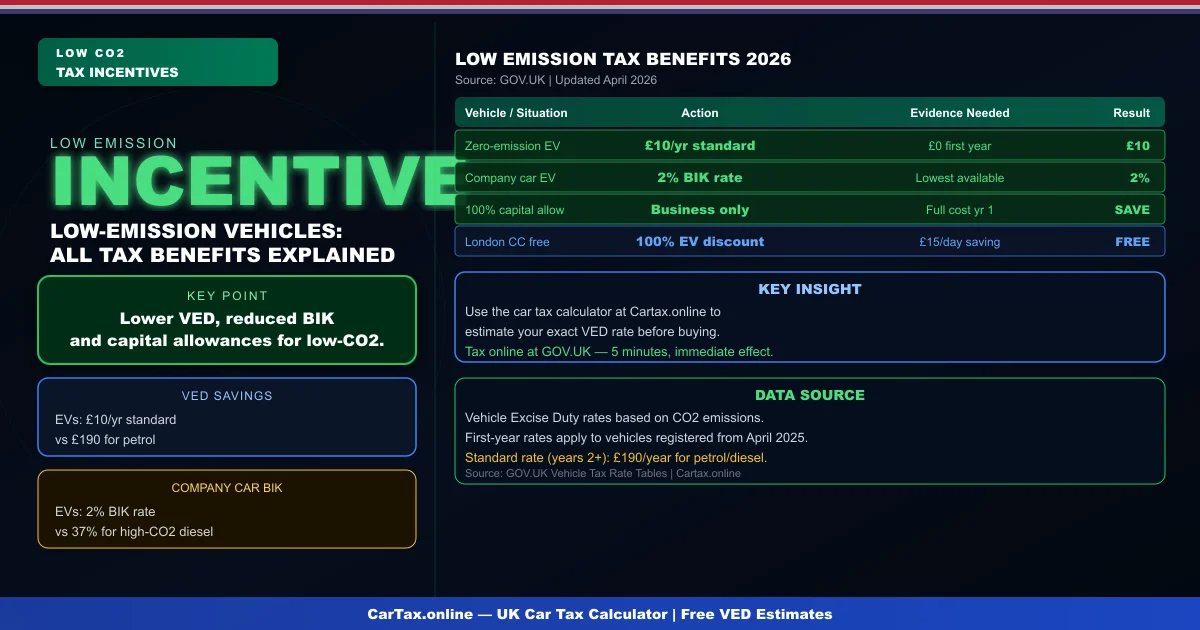
Low-emission vehicles benefit from a range of tax advantages that make them more attractive financially. Understanding the full scope of incentives helps you make an informed decision when choosing a vehicle.
VED Savings for Low-Emission Vehicles
The most direct tax benefit is on VED. Zero-emission vehicles (0g/km CO2) pay £0 first year and £10 per year standard rate — saving £180 per year versus a petrol or diesel car. Vehicles with CO2 between 1 and 50g/km (primarily plug-in hybrids) pay just £10 first year and £50 per year standard. These savings accumulate significantly over ownership — a £180 annual VED saving over five years is £900 back in your pocket.
Company Car BIK: The Biggest Benefit
For company car drivers, Benefit in Kind tax on low-emission vehicles is dramatically lower than on high-emission cars. Zero-emission company cars attract a BIK rate of just 2% in 2026-27, rising to 5% in 2027-28. Compare this to a high-emission diesel at up to 37% BIK. On a £50,000 vehicle, the difference between 2% and 37% BIK is £17,500 per year in additional taxable benefit. For company car drivers, choosing a low-emission vehicle is one of the most impactful tax decisions available.
Enhanced Capital Allowances for Businesses
Businesses purchasing low-emission vehicles can claim 100% first-year capital allowances. This means the full cost of a qualifying vehicle can be deducted from taxable profits in the year of purchase — rather than being depreciated over several years. Vehicles with CO2 emissions up to 50g/km qualify. For a business paying 25% corporation tax, a £40,000 low-emission vehicle generates a £10,000 tax deduction in the year of purchase. Check HMRC's capital allowances guidance for current qualifying criteria. Related: Low Emission Vehicle Tax Benefits UK 2026 | Car Tax and Low Emission Vehicles UK 2026 | Car Tax Savings with Low Emission Cars UK 2026 | Car Tax and Eco Schemes UK 2026.
London Congestion Charge and Clean Air Zones
Low-emission vehicles qualify for discounts or exemptions in most UK clean air zones and London's Congestion Charge. Zero-emission vehicles get 100% discount on London's Congestion Charge — worth up to £5,475 per year if driven daily. Many UK cities offer reduced or free parking for low-emission vehicles. These benefits — while not strictly road tax — add significant value to owning a low-emission vehicle, particularly if you drive in London regularly.
VAT Recovery for Zero-Emission Vehicles
VAT-registered businesses can reclaim 100% of the VAT on the purchase price of a zero-emission vehicle used entirely for business. This is a significant advantage — on a £50,000 EV, VAT recovery is £8,333. For mixed-use vehicles, only a proportional amount can be reclaimed. Consult an accountant to ensure you claim the correct proportion based on business versus personal mileage.
Frequently Asked Questions
Q: How much is car tax (VED) in the UK 2026?
Car tax rates in the UK depend on your vehicle's CO2 emissions and list price. Standard rates start from £190 per year for petrol and diesel cars, with zero-rated VED for EVs. First-year rates vary from £0 to £2,605 depending on emissions. Additional premiums apply for vehicles over £40,000.
Q: How do I check if my car is taxed online?
You can check your vehicle's tax status for free on the Gov.uk website at gov.uk/check-vehicle-tax. You'll need your vehicle's registration number (number plate). You can also check via the Motor Insurance Database to verify road tax and insurance status simultaneously.
Q: Can I get a refund on car tax if I sell my vehicle?
Yes — if you sell or scrap your vehicle, you can claim a refund on any full months of remaining road tax. Contact DVLA with the V11 reminder letter or apply online at gov.uk. Refunds are usually processed within 4-6 weeks.
Q: Is road tax refund available when transferring ownership?
No — road tax does not transfer with the vehicle. When you sell your car, the tax is automatically cancelled and any remaining months are refunded to you by DVLA. The new owner must tax the vehicle immediately. As a buyer, always verify the vehicle's tax status before purchasing.
Q: What is the luxury car tax threshold in the UK 2026?
The additional rate for vehicles over £40,000 (list price) adds £410 per year to standard VED rates for years 2-6 of registration. This surcharge brings the annual cost for high-emission vehicles over £40,000 to around £600-690 per year. Pure EVs under £40,000 pay zero VED.