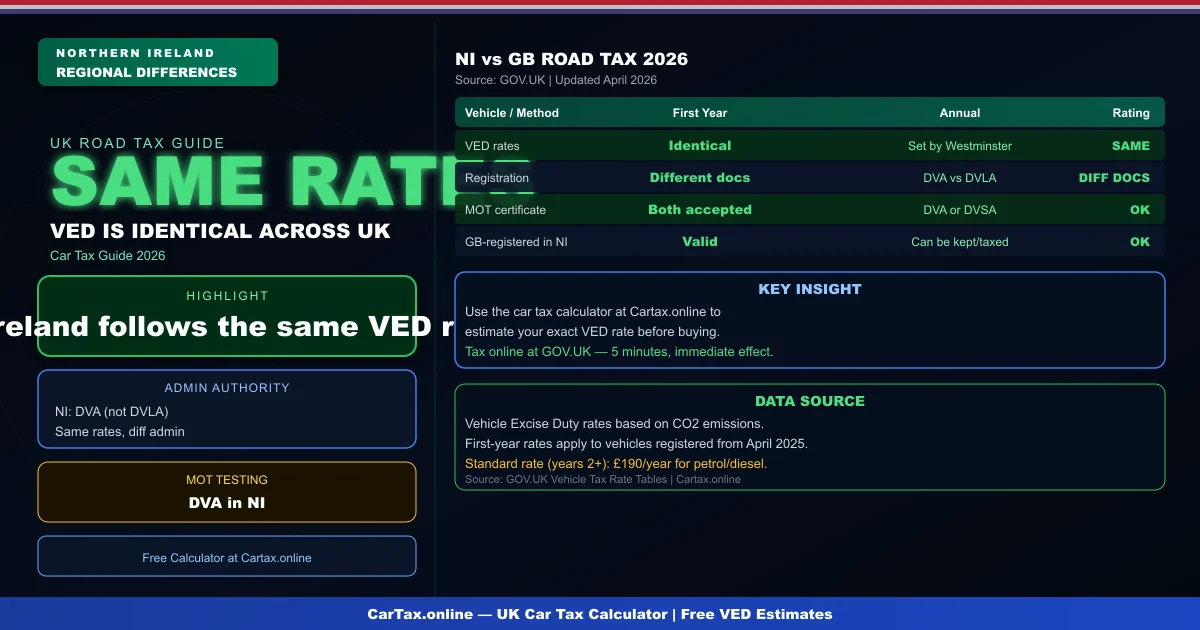
Car tax Northern Ireland vs UK mainland — Northern Ireland is part of the United Kingdom but has separate vehicle licensing authority. Here is how road tax differs between Northern Ireland and Great Britain in 2026.
DVA vs DVLA: Different Licensing Authorities
Northern Ireland's Driver and Vehicle Agency (DVA) handles vehicle licensing separately from DVLA in Great Britain. While both follow the same Vehicle Excise Duty (VED) rates set by the UK government, the administration and documentation processes differ. The DVA issues its own vehicle registration documents and tax discs.
VED Rates Are Identical Across the UK
Road tax rates are set by Westminster and apply uniformly across the entire United Kingdom — including Northern Ireland. A vehicle in Belfast pays exactly the same VED as a vehicle in Birmingham for equivalent CO2 emissions. There is no regional variation in road tax rates.
V5C Registration: NI vs GB Certificates
The registration document for Northern Ireland vehicles differs from the GB V5C logbook in colour and format. However, for road tax purposes, both are accepted when taxing at the Post Office or online. The tax rates and rules are identical — only the administrative documents differ. Related: Car Tax Northern Ireland vs UK 2026 | Car Tax vs Motorcycle Tax UK 2026 | Car Tax vs Motorcycle Tax UK 2026 | Petrol vs Diesel Car Tax UK 2026.
MOT Testing in Northern Ireland
MOT testing for vehicles in Northern Ireland is administered by the DVA, not DVSA as in GB. The MOT test requirements and pass/fail criteria are identical across the UK, but the testing centres and certificate format are different. An MOT certificate from either DVA or DVSA is accepted for road tax purposes.
Transferring a Vehicle Between NI and GB
When transferring a vehicle from Northern Ireland to Great Britain, you must notify both DVA and DVLA of the change of keeper and address. The registration number remains valid across the UK — a NI-registered vehicle can be kept and taxed in GB. The VED rate remains based on CO2 emissions regardless of registration location.
Conclusion
Car tax Northern Ireland vs UK: VED rates are identical. Only administration differs — DVA vs DVLA. MOT and registration documents differ but both are accepted for road tax purposes. nidirect has NI-specific information.
Frequently Asked Questions
Q: How much is car tax (VED) in the UK 2026?
Car tax rates in the UK depend on your vehicle's CO2 emissions and list price. Standard rates start from £190 per year for petrol and diesel cars, with zero-rated VED for EVs. First-year rates vary from £0 to £2,605 depending on emissions. Additional premiums apply for vehicles over £40,000.
Q: How do I check if my car is taxed online?
You can check your vehicle's tax status for free on the Gov.uk website at gov.uk/check-vehicle-tax. You'll need your vehicle's registration number (number plate). You can also check via the Motor Insurance Database to verify road tax and insurance status simultaneously.
Q: Can I get a refund on car tax if I sell my vehicle?
Yes — if you sell or scrap your vehicle, you can claim a refund on any full months of remaining road tax. Contact DVLA with the V11 reminder letter or apply online at gov.uk. Refunds are usually processed within 4-6 weeks.
Q: Is road tax refund available when transferring ownership?
No — road tax does not transfer with the vehicle. When you sell your car, the tax is automatically cancelled and any remaining months are refunded to you by DVLA. The new owner must tax the vehicle immediately. As a buyer, always verify the vehicle's tax status before purchasing.
Q: What is the luxury car tax threshold in the UK 2026?
The additional rate for vehicles over £40,000 (list price) adds £410 per year to standard VED rates for years 2-6 of registration. This surcharge brings the annual cost for high-emission vehicles over £40,000 to around £600-690 per year. Pure EVs under £40,000 pay zero VED.