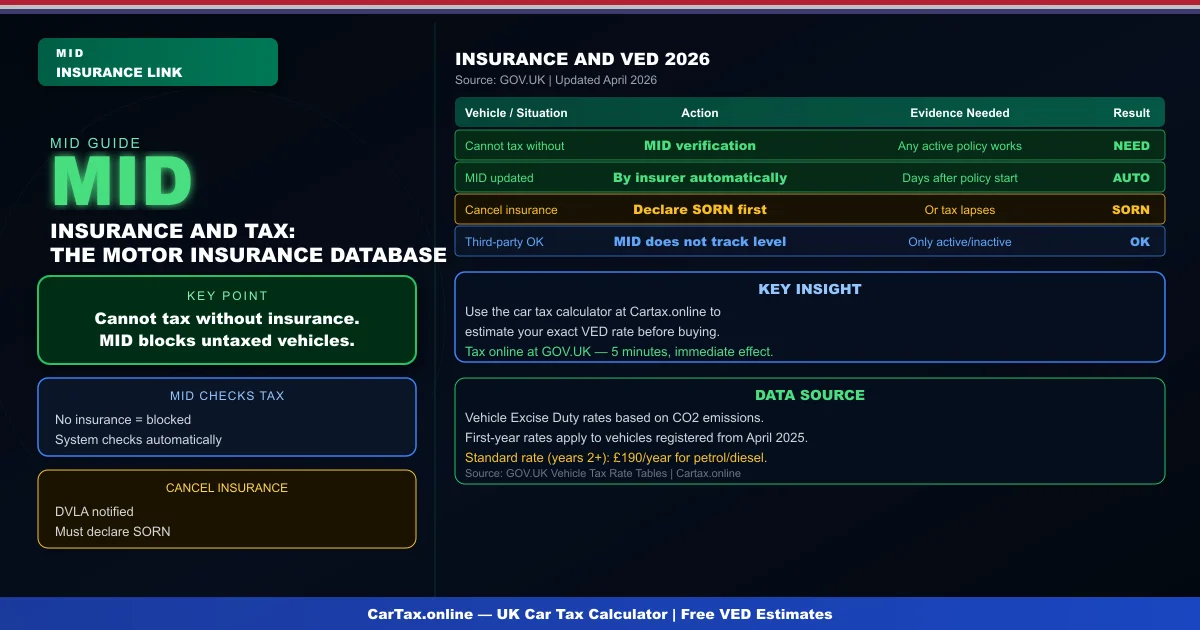
Insurance is a legal prerequisite for road tax. The Motor Insurance Database creates an electronic link between your insurance and your vehicle's tax status, preventing untaxed vehicles from remaining on the road.
The Motor Insurance Database (MID)
The Motor Insurance Database is a central record of all insured vehicles in the UK. Insurers are legally required to record every insured vehicle on the MID within days of issuing a policy. DVLA checks the MID when you attempt to tax a vehicle — if the MID shows no active insurance, the system blocks the tax transaction. This prevents vehicles from being taxed without at least the minimum third-party insurance required by law.
What the Tax System Checks
When you tax a vehicle online or at the Post Office, the system checks the MID for active insurance on that vehicle's registration mark. It also checks the MOT database for a valid MOT certificate. Both must be current and valid for tax to proceed. The insurance check is automatic — you do not need to provide your certificate of insurance number at the Post Office; the system looks it up.
Insurance Cancellation and Your Tax
If you cancel your car insurance, the insurer notifies the MID. If you do not declare a SORN within days, DVLA will contact you because the vehicle is no longer insured and road tax cannot be maintained without it. To avoid penalties and complications, always declare a SORN before cancelling insurance if you plan to keep the vehicle off the road. Some insurers offer short-term or suspended cover options — check whether these keep the MID record active. Related: Car Tax and Insurance Certificate UK 2026 | Car Tax and Insurance Interaction UK 2026 | Car Tax and Insurance Interaction UK 2026 | Auto Insurance Uk.
Vintage and Classic Car Insurance
Classic car insurance policies sometimes restrict usage to agreed-mileage or event-use only. As long as the policy is active and the MID is updated, the vehicle can be taxed. Check with your classic car insurer that they update the MID correctly — some specialist policies are not always immediately reflected in the database. If the MID does not update, contact your insurer to ensure the record is correct.
Third-Party Only vs Comprehensive
The MID records whether a vehicle is insured — it does not record the level of cover. Both third-party only and comprehensive insurance policies appear the same on the MID. For the purpose of taxing a vehicle, any active insurance policy is sufficient. The level of cover you choose is a personal decision based on the vehicle's value and your circumstances.
Official Resources: GOV.UK Check Vehicle Tax | GOV.UK Vehicle Tax | DVLA Online | MOT Check
Frequently Asked Questions
Q: How much is car tax (VED) in the UK 2026?
Car tax rates in the UK depend on your vehicle's CO2 emissions and list price. Standard rates start from £190 per year for petrol and diesel cars, with zero-rated VED for EVs. First-year rates vary from £0 to £2,605 depending on emissions. Additional premiums apply for vehicles over £40,000.
Q: How do I check if my car is taxed online?
You can check your vehicle's tax status for free on the Gov.uk website at gov.uk/check-vehicle-tax. You'll need your vehicle's registration number (number plate). You can also check via the Motor Insurance Database to verify road tax and insurance status simultaneously.
Q: Can I get a refund on car tax if I sell my vehicle?
Yes — if you sell or scrap your vehicle, you can claim a refund on any full months of remaining road tax. Contact DVLA with the V11 reminder letter or apply online at gov.uk. Refunds are usually processed within 4-6 weeks.
Q: Is road tax refund available when transferring ownership?
No — road tax does not transfer with the vehicle. When you sell your car, the tax is automatically cancelled and any remaining months are refunded to you by DVLA. The new owner must tax the vehicle immediately. As a buyer, always verify the vehicle's tax status before purchasing.
Q: What is the luxury car tax threshold in the UK 2026?
The additional rate for vehicles over £40,000 (list price) adds £410 per year to standard VED rates for years 2-6 of registration. This surcharge brings the annual cost for high-emission vehicles over £40,000 to around £600-690 per year. Pure EVs under £40,000 pay zero VED.