April 12, 2026 in United Kingdom — Plug-in hybrid vehicles occupy a unique position in the UK road tax system: they produce some CO2 emissions but significantly less than petrol or diesel cars, which affects their Vehicle Excise Duty (VED) banding. With more than 50 plug-in hybrid models now on sale in the UK, understanding hybrid car tax is essential for anyone considering a plug-in as a bridge between petrol and full electric. This guide covers every hybrid tax scenario for 2026.
How Hybrid Vehicles Are Taxed in the UK
Road tax for hybrids follows the same CO2-based system as petrol and diesel cars, with one key difference: hybrids emit less CO2 per kilometre, placing them in lower tax bands and reducing the first-year VED rate. After the first year, all post-April 2017 vehicles pay the standard £195/year rate regardless of fuel type.
The hybrid tax calculation considers:
- The vehicle's official CO2 emissions figure (grams per kilometre)
- Whether it's a plug-in hybrid (PHEV) or self-charging hybrid
- The vehicle's list price (for the premium supplement on cars over £40,000)
- The registration date (pre- or post-April 2017 rules)
Plug-in Hybrid First-Year VED Rates 2026
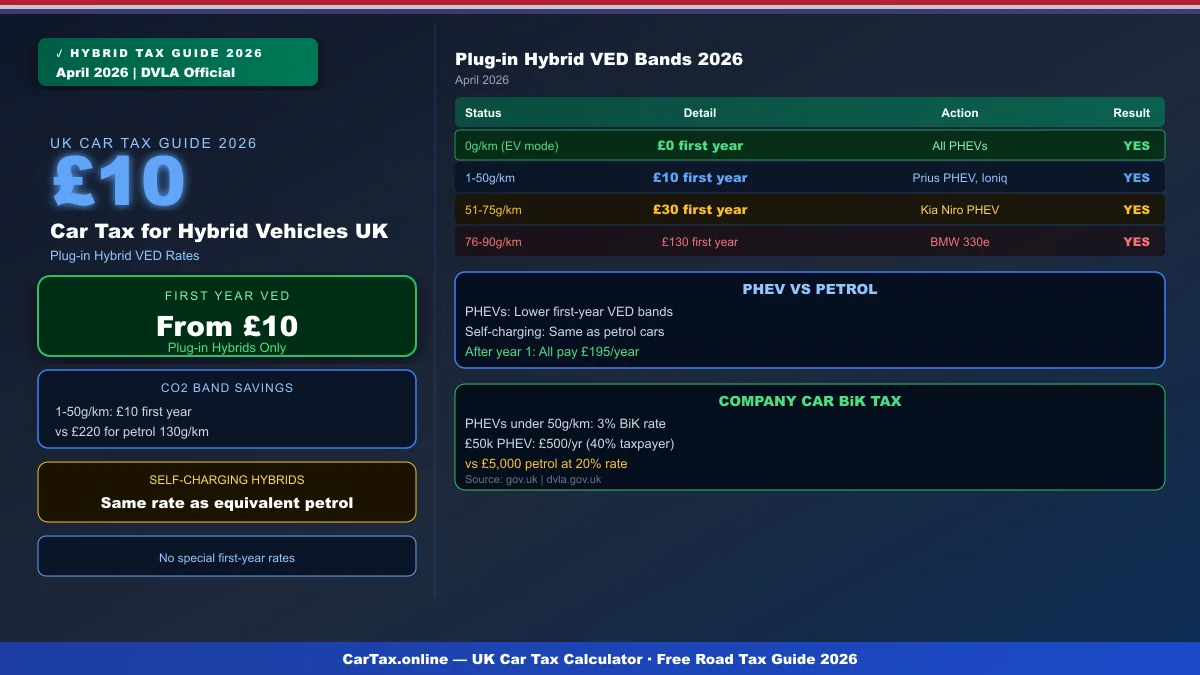
When you register a new plug-in hybrid, the first-year rate is based on its CO2 emissions. Plug-in hybrids typically emit between 1g/km and 130g/km depending on battery size and model:
| CO2 Emissions (g/km) | First-Year VED Rate | Example Models |
|---|---|---|
| 0 (pure electric mode) | £0 | All plug-in hybrids in EV mode |
| 1–50 | £10 | Toyota Prius PHEV, Hyundai Ioniq PHEV |
| 51–75 | £30 | Kia Niro PHEV, Volkswagen Golf GTE |
| 76–90 | £130 | BMW 330e, Mercedes C300de |
| 91–100 | £165 | Audi A3 TFSIe, Volvo V60 Recharge |
| 101–110 | £185 | Ford Kuga PHEV, Skoda Octavia iV |
| 111–130 | £220 | Older plug-in hybrids, larger SUVs |
| 131–150 | £270 | High-emission plug-in hybrids |
Self-Charging Hybrid vs Plug-in Hybrid Tax
Not all hybrids are treated the same for tax purposes. The distinction between self-charging hybrids and plug-in hybrids matters for VED:
Self-charging hybrids (also called full hybrids or HEVs) cannot be plugged in and run primarily on petrol. Examples include Toyota Prius, Honda Insight, and Hyundai Ioniq Hybrid. These vehicles have CO2 emissions typically between 80-110g/km, placing them in standard tax bands. They qualify for no special first-year rates and pay the same as equivalent petrol models.
Plug-in hybrids (PHEVs) have a charging port, larger battery, and can run on electric-only power for 20-50 miles. Examples include Toyota RAV4 PHEV, BMW 330e, and Volkswagen Passat GTE. Their lower official CO2 figures (sometimes under 50g/km) place them in preferential first-year bands, saving £10-£130 compared to equivalent petrol cars.
Premium Supplement — Cars Over £40,000
From year two onwards, plug-in hybrids with a list price exceeding £40,000 attract a premium VED supplement of £390 per year for five years (years 2-6 of ownership). This means a £50,000 plug-in hybrid pays £585 per year from year two (£195 base + £390 supplement).
Self-charging hybrids do not have the plug-in first-year advantage but are also not subject to the premium supplement if their CO2 is under 50g/km (which most are not). However, if a self-charging hybrid costs over £40,000, it still pays the premium supplement — the supplement applies to all vehicles over £40,000 regardless of fuel type.
Plug-in Hybrid vs Full Electric — Tax Comparison
PHEVs occupy the middle ground between petrol cars and pure EVs for road tax purposes:
| Vehicle Type | First Year VED | Year 2+ VED | Premium Supplement | 10-Year Total |
|---|---|---|---|---|
| Pure Electric (0g/km) | £0 | £195 | £0 (if under £40k) | £1,950 |
| Plug-in Hybrid (50g/km) | £10 | £195 | £0 (if under £40k) | £1,960 |
| Plug-in Hybrid (50g/km, £45k) | £10 | £585 | £390/yr for 5 yrs | £4,960 |
| Petrol (130g/km) | £220 | £195 | £0 (under £40k) | £2,170 |
| Petrol (£45k) | £270 | £585 | £390/yr for 5 yrs | £5,220 |
For company car drivers, the BiK (Benefit in Kind) tax difference is significant. Plug-in hybrids with CO2 under 50g/km attract a 3% BiK rate in 2025/26, compared to 8-37% for petrol and diesel cars. On a £50,000 PHEV, a 40% taxpayer pays just £500 in annual BiK tax versus £5,000 for a standard petrol car at the 20% rate.
Are Hybrids Worth the Tax Savings?
The road tax savings from choosing a plug-in hybrid over a petrol car are modest — typically £10-£210 in the first year. The real financial advantage comes from company car BiK tax, fuel savings from electric-only commuting, and lower running costs.
However, pure electric vehicles save even more road tax and are increasingly competitive on price. If your annual mileage is primarily short urban trips and you have home charging, a pure EV eliminates fuel costs and road tax concerns entirely.
Frequently Asked Questions
Do self-charging hybrids pay less road tax than petrol cars?
No. Self-charging hybrids (HEVs) like the Toyota Prius standard model pay the same road tax as equivalent petrol cars. They have CO2 emissions of 80-110g/km, placing them in standard bands. Only plug-in hybrids with a charging port qualify for preferential first-year rates.
Can I claim the plug-in grant and the low-emission VED rate?
Yes. The plug-in vehicle grant (up to £2,500 for cars under £35,000) is a purchase subsidy separate from VED. Both can apply to the same vehicle. The first-year VED rate is determined by official CO2 emissions, not by grant eligibility.
What happens when I sell my plug-in hybrid?
When you sell a plug-in hybrid, the new keeper pays road tax at the standard rate from year two onwards — the premium supplement does not transfer to the new owner. The new keeper will only pay the £195/year standard rate (unless the vehicle is over £40,000, in which case they pay the supplement from year one).
Conclusion
Plug-in hybrids offer modest road tax savings of £10-£210 in the first year compared to equivalent petrol cars, thanks to their lower CO2 emissions. After year one, they pay the same £195/year standard rate as all other post-April 2017 vehicles. For company car drivers, the BiK advantage makes plug-in hybrids significantly cheaper to run than petrol equivalents.
Use our UK car tax calculator to compare plug-in hybrid, petrol, and electric vehicle road tax costs for any specific model.
Official Resources: GOV.UK Check Vehicle Tax | GOV.UK Vehicle Tax | DVLA Online | MOT Check
Frequently Asked Questions
Q: How much is car tax (VED) in the UK 2026?
Car tax rates in the UK depend on your vehicle's CO2 emissions and list price. Standard rates start from £190 per year for petrol and diesel cars, with zero-rated VED for EVs. First-year rates vary from £0 to £2,605 depending on emissions. Additional premiums apply for vehicles over £40,000.
Q: How do I check if my car is taxed online?
You can check your vehicle's tax status for free on the Gov.uk website at gov.uk/check-vehicle-tax. You'll need your vehicle's registration number (number plate). You can also check via the Motor Insurance Database to verify road tax and insurance status simultaneously.
Q: Can I get a refund on car tax if I sell my vehicle?
Yes — if you sell or scrap your vehicle, you can claim a refund on any full months of remaining road tax. Contact DVLA with the V11 reminder letter or apply online at gov.uk. Refunds are usually processed within 4-6 weeks.
Q: Is road tax refund available when transferring ownership?
No — road tax does not transfer with the vehicle. When you sell your car, the tax is automatically cancelled and any remaining months are refunded to you by DVLA. The new owner must tax the vehicle immediately. As a buyer, always verify the vehicle's tax status before purchasing.
Q: What is the luxury car tax threshold in the UK 2026?
The additional rate for vehicles over £40,000 (list price) adds £410 per year to standard VED rates for years 2-6 of registration. This surcharge brings the annual cost for high-emission vehicles over £40,000 to around £600-690 per year. Pure EVs under £40,000 pay zero VED.