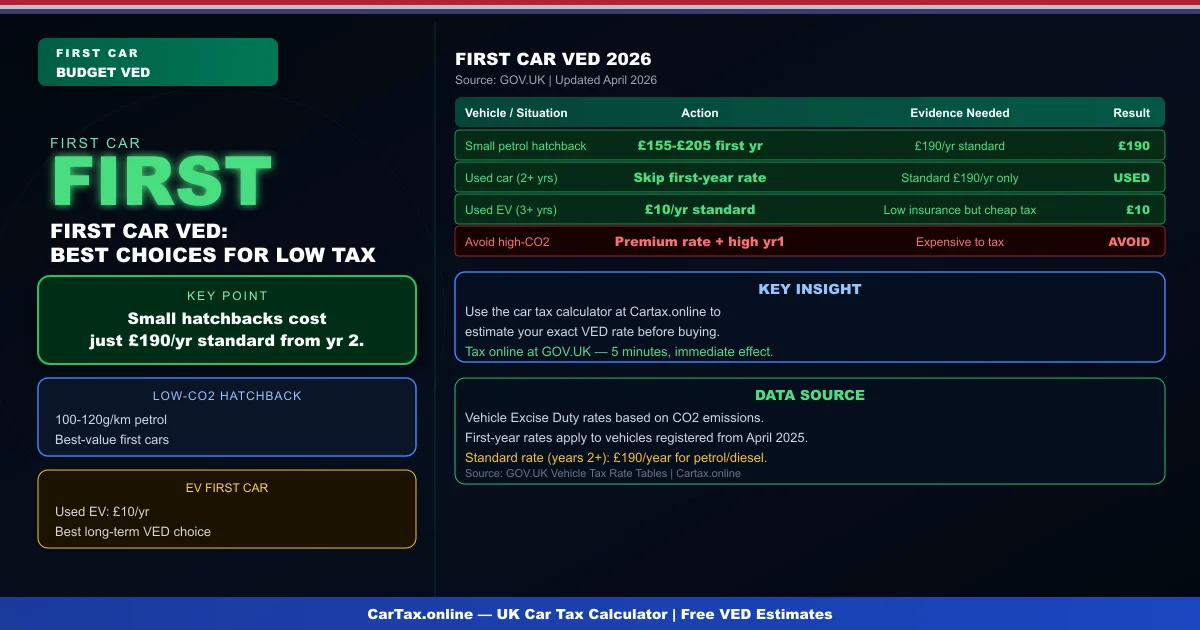
Your first car is often the one where road tax costs matter most — budget-conscious buyers need every saving they can get. Choosing a low-VED vehicle as your first car sets good financial habits and reduces ongoing costs.
The Cheapest Cars to Tax
Zero-emission electric cars are the cheapest to tax at just £10 per year from year two. However, a used electric car within budget may be harder to find than a low-CO2 petrol. Look for cars with official CO2 emissions under 120g/km — these fall into lower first-year VED bands and pay lower standard rates. A petrol car at 110g/km costs £155 first year and £190 standard — versus £540 for a 180g/km equivalent.
Small Hatchbacks: The Best Value
Small hatchbacks like the Ford Fiesta, Vauxhall Corsa, Volkswagen Polo and Toyota Yaris offer the lowest VED in the new car market. Most emit between 100-125g/km, placing them in the £155-£205 first-year band. Standard rate from year two is £190 for all. These cars are also cheap to insure — a key consideration for new drivers — making them the best overall value first car choice. The total cost of ownership is lowest in this segment.
Used Cars: Skip the First-Year Rate
Buying a used car that is already past its first-year period means you skip the first-year VED cost entirely. A three-year-old Ford Fiesta costs just £190 per year in VED. Over five years, you pay £950 in VED versus £1,165 if you bought new (first-year £155 + four years standard £950). The saving of £215 compounds when combined with the lower purchase price of used cars. Used is financially smarter for most first car buyers. Related: Car Tax for Your First Car UK 2026 | Car Tax for New Drivers UK 2026 | Car Tax for New Drivers UK 2026 | Car Tax for New Drivers UK 2026.
Electric First Cars
As used electric car prices fall, an electric first car is increasingly realistic. A three-year-old Nissan Leaf or Renault Zoe costs £10 per year in road tax. Insurance costs for EVs are slightly higher than equivalent petrol cars for new drivers due to repair costs, but the VED saving of £180 per year versus a petrol equivalent helps offset this. Use the car tax calculator at Cartax.online to compare VED across your shortlist of first cars.
What to Avoid for First Cars
Avoid high-CO2 performance cars as a first car — the combination of high insurance, high first-year VED and premium rate surcharges makes them very expensive to run. Also avoid pre-2015 diesels if you drive in urban areas — they may fail ULEZ and clean air zone standards, costing hundreds per year in daily charges. A sensible low-CO2 hatchback gives you the best balance of low VED, low insurance and low running costs.
Official Resources: Parivahan Portal | Vahan Road Tax | India GST Portal | FAME-III Scheme
Frequently Asked Questions
Q: What is the current road tax rate for cars in India 2026?
Road tax rates in India vary by state and vehicle category. For new cars, GST is charged at 5% for EVs, 18% for hybrids under 1,200cc, and up to 28% for petrol/diesel SUVs. State road tax is charged separately and varies from Rs3,000-15,000 annually depending on the state's slab system. Check your specific state's RTO website for current rates.
Q: How do I calculate my car road tax online in India?
You can calculate your car road tax using online calculators available on state RTO portals and CarTax.online. The calculation considers your vehicle's ex-showroom price, fuel type, engine capacity, and state of registration. Road tax is payable annually or for the vehicle's lifetime depending on your state's rules.
Q: Is GST included in the road tax for new cars in India?
No — GST and road tax are separate charges. GST is a central tax charged by the vehicle manufacturer at the time of purchase. State road tax is a separate annual or one-time charge levied by your state's transport department. Both apply at the time of first registration, and annual road tax continues for subsequent years.
Q: Do electric vehicles get tax benefits in India 2026?
Yes — electric vehicles in India qualify for a reduced GST rate of 5% (down from 28% for petrol cars). Under FAME-III subsidies, EVs may also qualify for additional state-level incentives, reduced road tax, and free registration in many states. The exact benefits vary by state.
Q: What happens if I don't pay my car road tax on time?
If you don't pay road tax, your vehicle's registration can be flagged in the Vahan database, preventing renewal of fitness certificates and creating legal liability during police checks. Penalties range from Rs200-500 per day of default in most states. Road tax is a legal requirement under the Motor Vehicles Act.