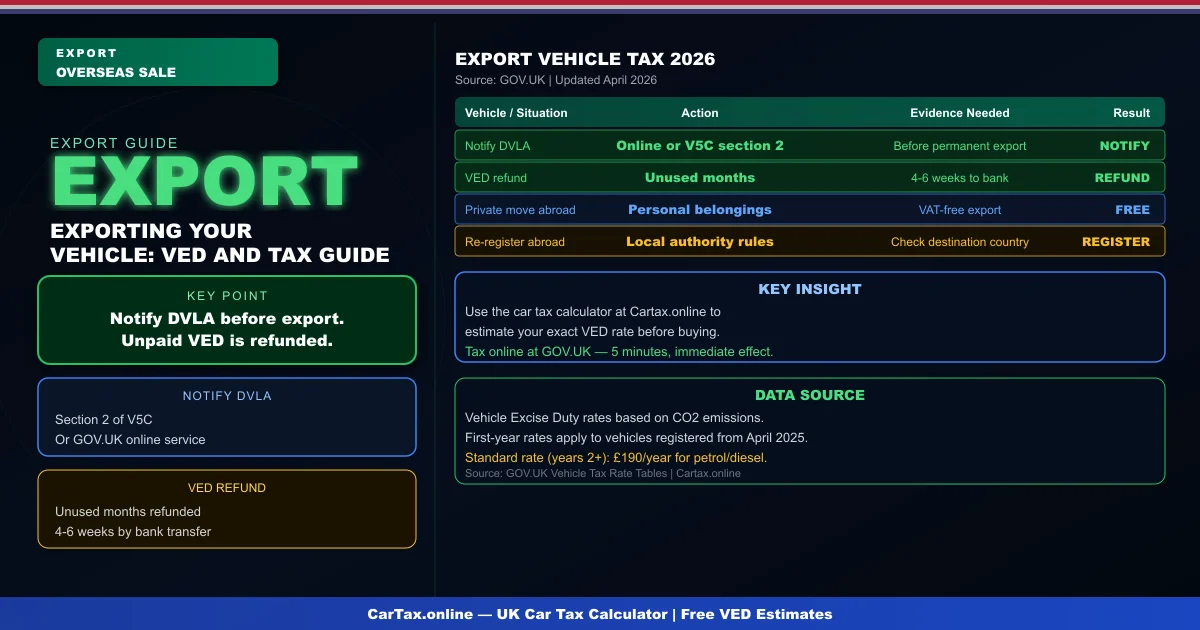
Exporting a vehicle from the UK means notifying DVLA and understanding how your road tax is handled. Whether you are moving abroad or selling to an overseas buyer, the process is straightforward if you follow the correct steps.
Notify DVLA When Exporting
You must notify DVLA when you permanently export a vehicle from the UK. Complete section 2 of the V5C (the yellow slip) and send it to DVLA along with evidence of export — such as a bill of lading, shipping documents or a certificate of export from customs. Alternatively, use the online export notification service on GOV.UK. DVLA will cancel your road tax and refund any unused months.
VAT and Export: Private vs Business
Exporting a vehicle has different VAT implications depending on whether you are a private individual or a business. If you are a private individual permanently moving abroad and taking your car with you, you can export the car VAT-free as part of your personal belongings — the MOT and customs declaration process applies. Businesses exporting vehicles commercially must comply with VAT export rules: zero-rating may be available for vehicles exported to another EU member state, but rules are complex.
VAT Margin Scheme for Car Dealers
Car dealers selling vehicles for export may use the VAT margin scheme, which applies to used vehicles. Under this scheme, VAT is calculated on the margin between the purchase price and sale price, not the full sale price. This is particularly relevant for dealers selling used cars to overseas buyers. Consult an accountant familiar with motor trade VAT rules to ensure correct application of the margin scheme. Related: Car Tax When Exporting Your Vehicle UK 2026 | Car Tax Refund UK 2026 | Cancel Car Tax UK 2026 | Car Tax Refund When Selling Your Car UK 2026.
VED Refund on Export
DVLA refunds unused road tax when you export a vehicle. The refund is calculated from the date DVLA processes your export notification, not the date of export itself. To receive the refund by bank transfer rather than cheque, ensure your bank details are registered with DVLA. The refund process takes four to six weeks. If you are exporting to an EU country, remember that the UK is no longer part of the EU customs union — different rules apply compared to pre-Brexit.
Re-Registering a UK Car Abroad
When you export a UK-registered car, you have two options: you can de-register it in the UK and re-register it in the destination country, or you can export it and register it under a temporary import. Most countries require you to register the car locally within a certain period — often 6 to 12 months for temporary imports. Check the specific rules of the destination country. The vehicle's CO2 rating will likely need to be re-established under local regulations, and the car may need modifications to meet local safety and emissions standards.
Frequently Asked Questions
Q: How much is car tax (VED) in the UK 2026?
Car tax rates in the UK depend on your vehicle's CO2 emissions and list price. Standard rates start from £190 per year for petrol and diesel cars, with zero-rated VED for EVs. First-year rates vary from £0 to £2,605 depending on emissions. Additional premiums apply for vehicles over £40,000.
Q: How do I check if my car is taxed online?
You can check your vehicle's tax status for free on the Gov.uk website at gov.uk/check-vehicle-tax. You'll need your vehicle's registration number (number plate). You can also check via the Motor Insurance Database to verify road tax and insurance status simultaneously.
Q: Can I get a refund on car tax if I sell my vehicle?
Yes — if you sell or scrap your vehicle, you can claim a refund on any full months of remaining road tax. Contact DVLA with the V11 reminder letter or apply online at gov.uk. Refunds are usually processed within 4-6 weeks.
Q: Is road tax refund available when transferring ownership?
No — road tax does not transfer with the vehicle. When you sell your car, the tax is automatically cancelled and any remaining months are refunded to you by DVLA. The new owner must tax the vehicle immediately. As a buyer, always verify the vehicle's tax status before purchasing.
Q: What is the luxury car tax threshold in the UK 2026?
The additional rate for vehicles over £40,000 (list price) adds £410 per year to standard VED rates for years 2-6 of registration. This surcharge brings the annual cost for high-emission vehicles over £40,000 to around £600-690 per year. Pure EVs under £40,000 pay zero VED.