Electric vehicles have transformed the road tax landscape in the UK. With zero tailpipe CO2 emissions, EVs attract the most favourable VED rates available — but they are not entirely free. Here is a complete explanation of electric vehicle tax in the UK for 2026.
VED Rates for Electric Vehicles
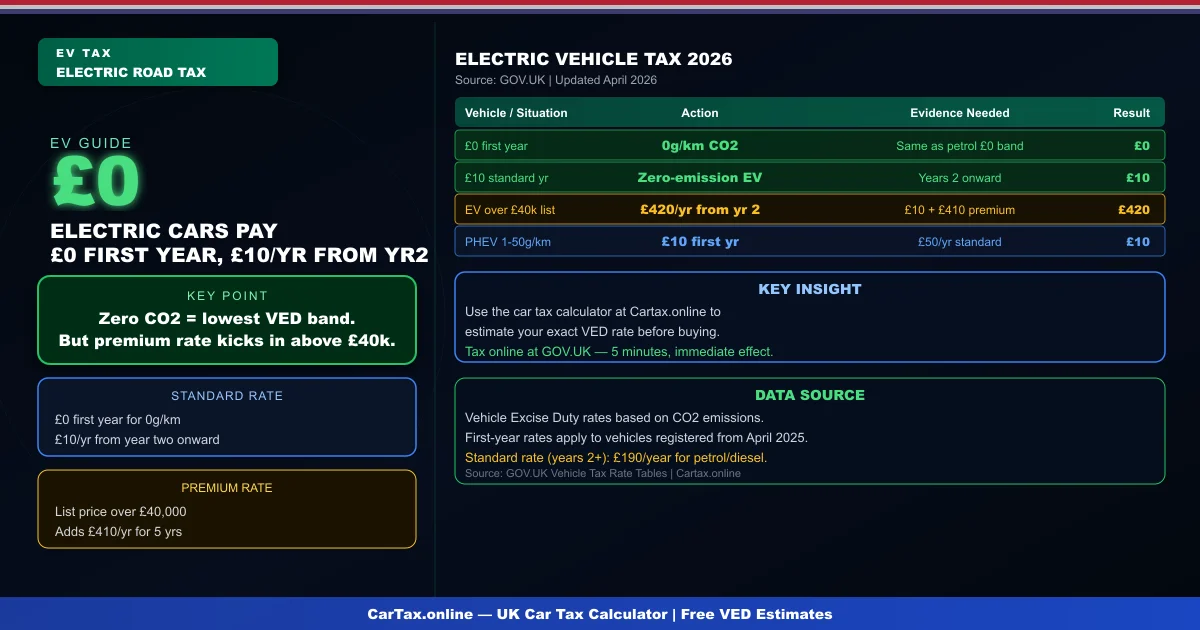
Zero-emission electric vehicles registered from April 2025 pay £0 for the first-year rate — the same as the lowest CO2 band. From year two onward, the standard reduced rate for zero-emission vehicles is £10 per year. This compares favourably to £190 per year for petrol and diesel cars. Even used EVs that are a few years old benefit from the £10 annual standard rate, making them far cheaper to tax than equivalent petrol or diesel vehicles.
The Premium Rate Still Applies to Expensive EVs
One important caveat: if your electric vehicle has a list price over £40,000, you still pay the premium supplement of £410 per year for years two through six — even though the standard rate is only £10. This means a £50,000 Tesla Model 3 Long Range costs £420 per year in road tax from year two, not £10. Only EVs under £40,000 list price escape the premium surcharge. Check the official VED rate tables on GOV.UK for full details.
Company Car BIK for EVs
For company car drivers, EVs are exceptionally tax-efficient. The BIK rate for zero-emission company cars is just 2% of the P11D value in 2026-27, rising to 5% in 2027-28. On a £50,000 electric company car, that means a taxable BIK benefit of just £1,000 at the 2% rate — compared to £18,500 for an equivalent high-emission diesel company car at 37%. This makes EVs the most cost-effective company car choice for both employer and employee. Related: Electric Vehicle Car Tax UK 2026 | UK Electric Vehicle Tax 2026 | Electric Vehicle Tax UK 2026 | Electric Vehicle Car Tax UK 2026.
Road Tax for Plug-in Hybrids
Plug-in hybrid electric vehicles (PHEVs) with CO2 emissions between 1 and 50g/km attract a first-year rate of just £10 and a standard rate of £50 per year. PHEVs above 50g/km but below 75g/km pay £25 first year and £50 standard. However, HMRC has been tightening the rules: from April 2025, the criteria for the lowest PHEV bands require a minimum electric-only range of more than 70 miles. Always verify the exact VED band for a specific PHEV model before purchasing.
VED Exemption for Low-Emission Vehicles
Hybrid vehicles that cannot be plugged in — sometimes called self-charging hybrids — do not qualify for reduced VED rates based on their hybrid status alone. Their road tax is based on their total CO2 emissions, which can be similar to a petrol car. Only vehicles with a plug and genuine zero-emission capability qualify for the reduced EV rates. Do not assume a hybrid gets EV-style VED treatment.
London Congestion Charge and EVs
While not strictly road tax, electric vehicles qualify for a 100% discount on the London Congestion Charge — worth up to £15 per day. From 2025, this discount applies only to vehicles meeting the Ultra Low Emission Discount (ULED) criteria, which includes fully electric vehicles. Register your EV with Transport for London to claim the discount. Other UK cities are introducing similar EV incentives for parking and clean air zones.
Frequently Asked Questions
Q: How much is car tax (VED) in the UK 2026?
Car tax rates in the UK depend on your vehicle's CO2 emissions and list price. Standard rates start from £190 per year for petrol and diesel cars, with zero-rated VED for EVs. First-year rates vary from £0 to £2,605 depending on emissions. Additional premiums apply for vehicles over £40,000.
Q: How do I check if my car is taxed online?
You can check your vehicle's tax status for free on the Gov.uk website at gov.uk/check-vehicle-tax. You'll need your vehicle's registration number (number plate). You can also check via the Motor Insurance Database to verify road tax and insurance status simultaneously.
Q: Can I get a refund on car tax if I sell my vehicle?
Yes — if you sell or scrap your vehicle, you can claim a refund on any full months of remaining road tax. Contact DVLA with the V11 reminder letter or apply online at gov.uk. Refunds are usually processed within 4-6 weeks.
Q: Is road tax refund available when transferring ownership?
No — road tax does not transfer with the vehicle. When you sell your car, the tax is automatically cancelled and any remaining months are refunded to you by DVLA. The new owner must tax the vehicle immediately. As a buyer, always verify the vehicle's tax status before purchasing.
Q: What is the luxury car tax threshold in the UK 2026?
The additional rate for vehicles over £40,000 (list price) adds £410 per year to standard VED rates for years 2-6 of registration. This surcharge brings the annual cost for high-emission vehicles over £40,000 to around £600-690 per year. Pure EVs under £40,000 pay zero VED.