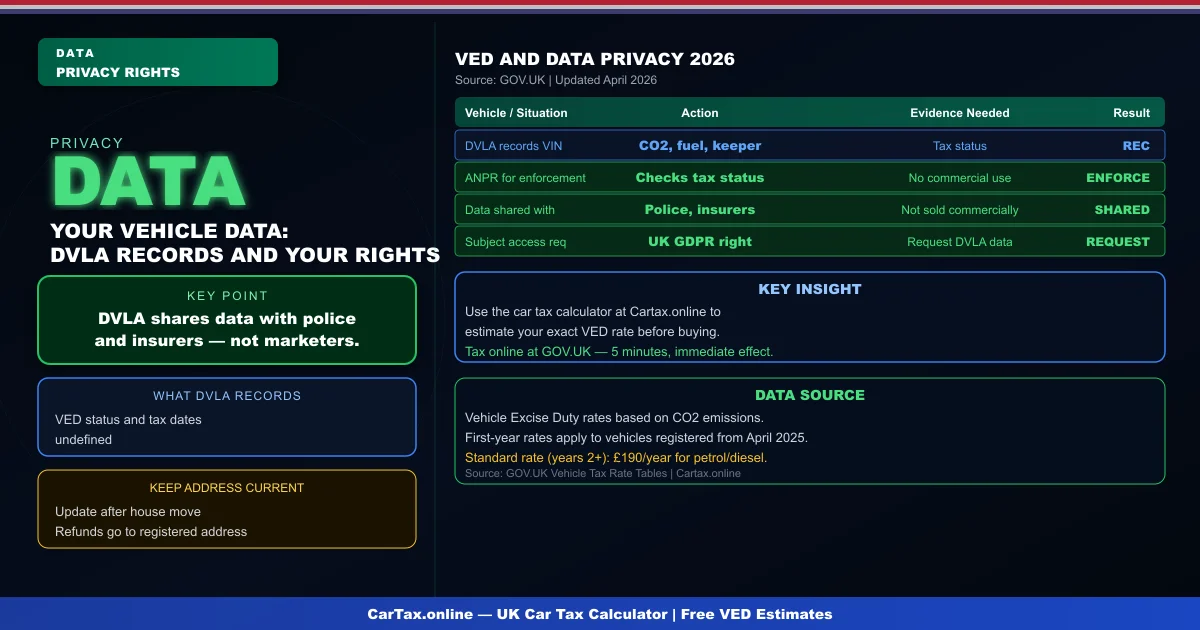
Road tax creates a digital record linked to your vehicle and your identity. Understanding what data DVLA collects, how it is shared and what rights you have helps you navigate the intersection of motoring and privacy.
What DVLA Records About Your Vehicle
DVLA maintains records of every taxed vehicle in the UK, including the vehicle identification number (VIN), registration mark, CO2 emissions, fuel type, first registration date, registered keeper's name and address, VED rate paid, and tax expiry date. This data is held under the Road Vehicle Licensing Act 2009 and is used for enforcement, road safety and tax administration. The data has a retention period even after a vehicle is deregistered.
ANPR and Road Tax Enforcement
Automatic Number Plate Recognition (ANPR) cameras are used by police and local authorities to identify vehicles without valid road tax. Every time a camera reads a registration number, it checks against DVLA's database of taxed vehicles. If the vehicle has no valid tax, DVLA or the police may issue a penalty notice. ANPR data retention periods are governed by the Surveillance Camera Code of Practice and data protection law — images not matching offences are typically deleted within days or weeks.
Who Can Access Your Vehicle Data?
DVLA shares vehicle keeper data with the police, local authorities for enforcement purposes, insurance companies for MID verification, and in specific circumstances where there is a legal basis. Individuals can request information held about them under the UK GDPR (subject access request). Find out how to make a subject access request to DVLA. Information is not sold to marketing companies or used for commercial purposes without consent. Related: Car Tax and Data Privacy UK 2026 | Car Tax and DVLA Database UK 2026 | Car Tax and DVLA Database UK 2026 | Avoid This Common Car Tax Error That Costs GBP1K.
Keeping Your Address Updated
When you tax a vehicle, your address is recorded by DVLA. Keeping this address current is your legal obligation — failure to update after a house move can result in fines and lost reminders. DVLA uses this address for all VED correspondence including refunds and penalty notices. Update your address online at GOV.UK or when you renew your tax. An outdated address means refund cheques or penalty notices go to the wrong place.
Buying a Car and Previous Keeper Data
When you buy a used car, the previous keeper's data remains in DVLA's system until the change of keeper is notified. The seller must notify DVLA for the VED to be correctly transferred. Until the change is processed, the previous keeper's address remains on DVLA records — which is why it is important for sellers to notify promptly and for buyers to verify the V5C transfer.
Frequently Asked Questions
Q: How much is car tax (VED) in the UK 2026?
Car tax rates in the UK depend on your vehicle's CO2 emissions and list price. Standard rates start from £190 per year for petrol and diesel cars, with zero-rated VED for EVs. First-year rates vary from £0 to £2,605 depending on emissions. Additional premiums apply for vehicles over £40,000.
Q: How do I check if my car is taxed online?
You can check your vehicle's tax status for free on the Gov.uk website at gov.uk/check-vehicle-tax. You'll need your vehicle's registration number (number plate). You can also check via the Motor Insurance Database to verify road tax and insurance status simultaneously.
Q: Can I get a refund on car tax if I sell my vehicle?
Yes — if you sell or scrap your vehicle, you can claim a refund on any full months of remaining road tax. Contact DVLA with the V11 reminder letter or apply online at gov.uk. Refunds are usually processed within 4-6 weeks.
Q: Is road tax refund available when transferring ownership?
No — road tax does not transfer with the vehicle. When you sell your car, the tax is automatically cancelled and any remaining months are refunded to you by DVLA. The new owner must tax the vehicle immediately. As a buyer, always verify the vehicle's tax status before purchasing.
Q: What is the luxury car tax threshold in the UK 2026?
The additional rate for vehicles over £40,000 (list price) adds £410 per year to standard VED rates for years 2-6 of registration. This surcharge brings the annual cost for high-emission vehicles over £40,000 to around £600-690 per year. Pure EVs under £40,000 pay zero VED.