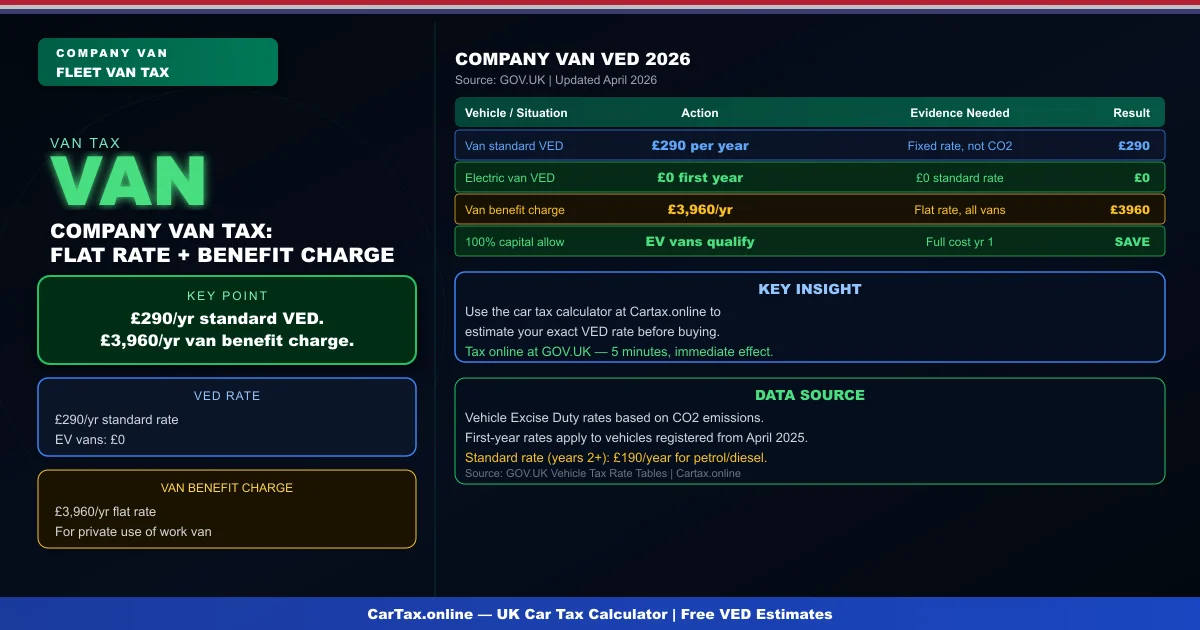
Company vans are taxed differently from company cars. Understanding the specific rules for vans — including VED, the van benefit charge, and capital allowances — helps businesses make the right choice for their fleet.
Van Excise Duty: £290 Per Year Standard
Vans pay a flat VED rate of £290 per year (standard rate). This is higher than the £190 standard rate for cars but is not CO2-based — it is a fixed charge for goods vehicles. Electric vans attract a reduced rate: £0 for the first year and £0 standard rate from year two. As electric van options expand, the VED saving from choosing electric is significant for businesses operating multiple vans.
Van Benefit Charge: £3,960 Per Year
If a company van is available for private use — which includes commuting — the driver pays a van benefit charge through PAYE. For 2026-27, the van benefit charge is £3,960 per year, regardless of the van's value, CO2 or age. This is a flat rate, not a percentage. For comparison, a high-value company car can generate a van benefit charge of £25,000+ per year. The flat rate makes vans particularly tax-efficient for employees who need a work vehicle but only use it for limited personal journeys.
Zero-Emission Van Benefit Reduction
The government has progressively reduced the van benefit charge for zero-emission vans. For 2026-27, the van benefit charge for electric vans is significantly lower than for diesel or petrol vans — approximately 40% of the standard rate. This makes electric vans even more attractive for company fleets where private use is expected. Check HMRC's current van benefit charge rates for the exact figures. Related: Company Van Tax UK 2026 | Car Tax for Fleet Managers UK 2026 | Car Tax for Fleet Managers UK 2026 | Car Tax and Company Car BiK UK 2026.
Capital Allowances for Business Vans
Businesses purchasing vans can claim capital allowances. Electric vans and vans with CO2 emissions up to 50g/km qualify for 100% first-year allowance — meaning the full purchase cost can be deducted from taxable profits in the year of purchase. For a £35,000 electric van at 25% corporation tax, this generates a £8,750 tax deduction. Diesel and petrol vans typically qualify for the standard writing-down allowances at 18% per year on the main pool rate.
VAT Recovery on Vans
Businesses can generally recover all VAT on the purchase of a commercial van, regardless of private use. This differs from cars, where VAT recovery is restricted for mixed-use vehicles. If your business uses a van primarily for business, the full VAT on the purchase price can be reclaimed. Consult an accountant to ensure correct VAT recovery and to understand any adjustments for private use proportion.
Vans vs Pickup Trucks: Tax Classification
Double-cab pickup trucks with a payload of under 1,000kg are taxed as cars, not vans — meaning they pay CO2-based VED and the car BIK system rather than the flat van benefit charge. A pickup used for both work and personal purposes may therefore be taxed as a car, not a van. This classification change from 2021 was confirmed by the Upper Tribunal. Check the specific model's classification before purchase.
Frequently Asked Questions
Q: How much is car tax (VED) in the UK 2026?
Car tax rates in the UK depend on your vehicle's CO2 emissions and list price. Standard rates start from £190 per year for petrol and diesel cars, with zero-rated VED for EVs. First-year rates vary from £0 to £2,605 depending on emissions. Additional premiums apply for vehicles over £40,000.
Q: How do I check if my car is taxed online?
You can check your vehicle's tax status for free on the Gov.uk website at gov.uk/check-vehicle-tax. You'll need your vehicle's registration number (number plate). You can also check via the Motor Insurance Database to verify road tax and insurance status simultaneously.
Q: Can I get a refund on car tax if I sell my vehicle?
Yes — if you sell or scrap your vehicle, you can claim a refund on any full months of remaining road tax. Contact DVLA with the V11 reminder letter or apply online at gov.uk. Refunds are usually processed within 4-6 weeks.
Q: Is road tax refund available when transferring ownership?
No — road tax does not transfer with the vehicle. When you sell your car, the tax is automatically cancelled and any remaining months are refunded to you by DVLA. The new owner must tax the vehicle immediately. As a buyer, always verify the vehicle's tax status before purchasing.
Q: What is the luxury car tax threshold in the UK 2026?
The additional rate for vehicles over £40,000 (list price) adds £410 per year to standard VED rates for years 2-6 of registration. This surcharge brings the annual cost for high-emission vehicles over £40,000 to around £600-690 per year. Pure EVs under £40,000 pay zero VED.