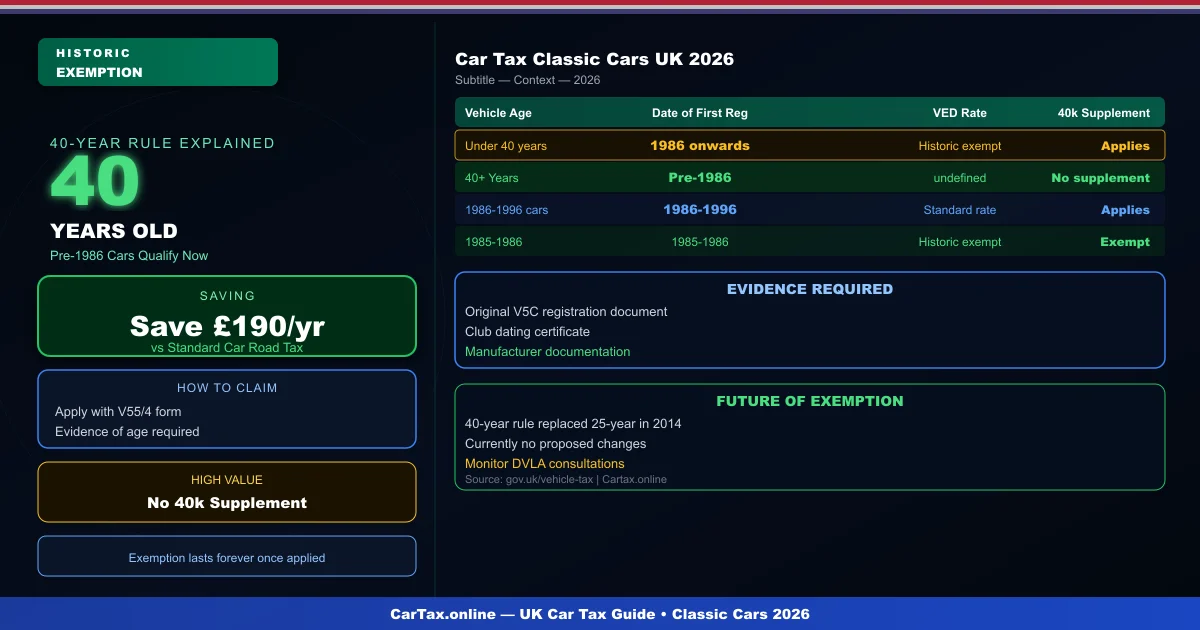
Vehicles over 40 years old qualify for the historic vehicle exemption from Vehicle Excise Duty in the UK. This exemption — one of the few remaining incentives for older vehicles — significantly reduces the lifetime cost of classic car ownership.
The Historic Vehicle Exemption Explained
Vehicles first registered 40 or more years ago qualify for exemption from the standard VED rate. The exemption applies automatically once the vehicle reaches 40 years of age from its date of first registration — not from the date it became a classic car in the popular sense. The exemption covers all road tax obligations for the vehicle, regardless of the keeper.
How to Claim the Exemption
The historic vehicle exemption is not automatic — you must apply to DVLA to claim it. Complete the V55/4 form (application for vehicle licence for a historic vehicle) and send it to DVLA along with evidence of the vehicle's age. Evidence can include the original registration document, a dating certificate from a club, or manufacturer documentation. Once approved, the exemption applies permanently — you do not need to renew it.
Vehicles Manufactured Before 1986
Any vehicle first registered before 1 January 1986 qualifies as a historic vehicle under the current rules. This covers a wide range of classic cars — from 1970s British sports cars to post-war saloons and 1980s performance cars as they reach their 40th anniversary. The exemption covers the vehicle regardless of its current condition or mileage. Related: Car Tax and Classic Cars UK 2026 | Classic Car Tax UK 2026 | Classic Car Tax UK 2026 | Classic Car Road Tax UK 2026.
Modified and Reconstructed Classics
Classic car enthusiasts who modify or reconstruct historic vehicles face a more complex situation. Reconstructed vehicles — where the original vehicle has been substantially rebuilt — may require individual assessment by DVLA. The age of the vehicle for VED purposes may be based on when the reconstruction was completed rather than the original chassis date. Check with DVLA before undertaking major restoration projects.
Classic Cars and the Expensive Car Supplement
Classic cars over 40 years old are exempt from the additional rate for vehicles with a list price over £40,000. This means a vintage Rolls-Royce or Aston Martin — even if it cost a significant amount when new — does not pay the additional £355 annual surcharge that applies to modern expensive cars. This makes historic vehicle exemption particularly valuable for high-value classics.
Future of the Historic Exemption
The historic vehicle exemption has been reviewed periodically as vehicle age thresholds have changed. The 40-year rule replaced an earlier 25-year exemption that was abolished in 2014. While there is no current proposal to change the 40-year threshold, classic car owners should monitor government consultations. The exemption is popular with the historic vehicle community and is generally considered sustainable given the limited number of affected vehicles.
Official Resources: GOV.UK Check Vehicle Tax | GOV.UK Vehicle Tax | DVLA Online | MOT Check
Frequently Asked Questions
Q: How much is car tax (VED) in the UK 2026?
Car tax rates in the UK depend on your vehicle's CO2 emissions and list price. Standard rates start from £190 per year for petrol and diesel cars, with zero-rated VED for EVs. First-year rates vary from £0 to £2,605 depending on emissions. Additional premiums apply for vehicles over £40,000.
Q: How do I check if my car is taxed online?
You can check your vehicle's tax status for free on the Gov.uk website at gov.uk/check-vehicle-tax. You'll need your vehicle's registration number (number plate). You can also check via the Motor Insurance Database to verify road tax and insurance status simultaneously.
Q: Can I get a refund on car tax if I sell my vehicle?
Yes — if you sell or scrap your vehicle, you can claim a refund on any full months of remaining road tax. Contact DVLA with the V11 reminder letter or apply online at gov.uk. Refunds are usually processed within 4-6 weeks.
Q: Is road tax refund available when transferring ownership?
No — road tax does not transfer with the vehicle. When you sell your car, the tax is automatically cancelled and any remaining months are refunded to you by DVLA. The new owner must tax the vehicle immediately. As a buyer, always verify the vehicle's tax status before purchasing.
Q: What is the luxury car tax threshold in the UK 2026?
The additional rate for vehicles over £40,000 (list price) adds £410 per year to standard VED rates for years 2-6 of registration. This surcharge brings the annual cost for high-emission vehicles over £40,000 to around £600-690 per year. Pure EVs under £40,000 pay zero VED.