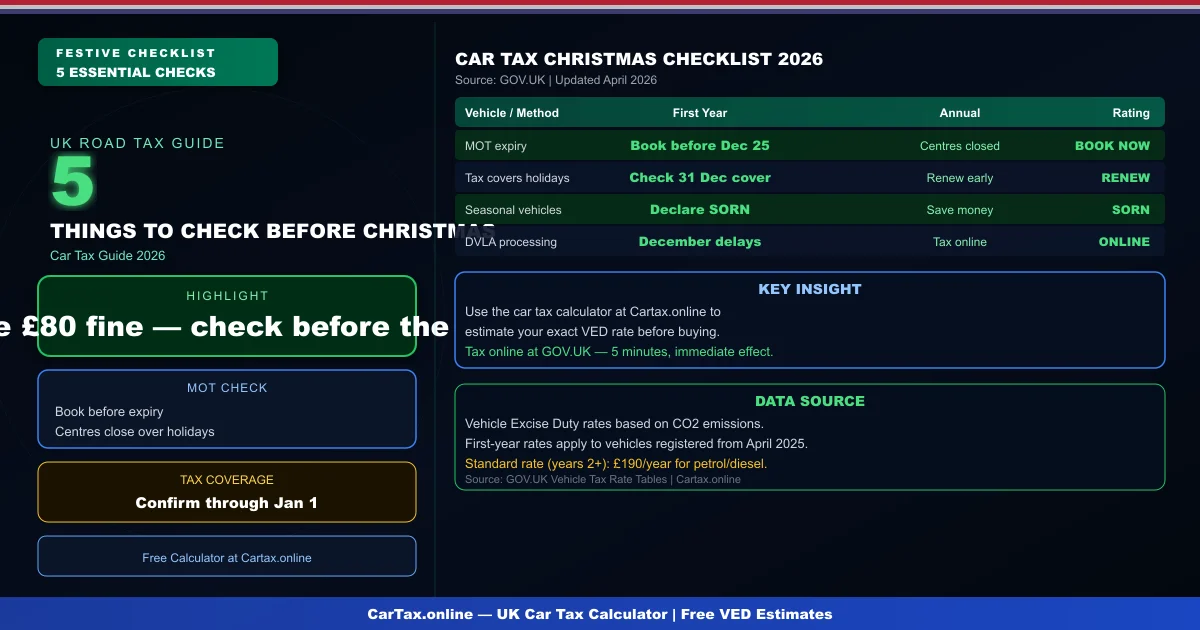
Car tax at Christmas UK — the festive season is one of the most common times for drivers to accidentally let their road tax lapse. Here are 5 essential car tax checks to complete before the Christmas holidays in 2026.
1. Check Your MOT Expiry Before Christmas
MOT testing centres close over Christmas and New Year. Check your MOT expiry date now — if it falls during the festive period, book your test immediately. Driving with an expired MOT invalidates your insurance, and without a valid MOT, you cannot tax your vehicle. A lapse over Christmas can take weeks to resolve.
2. Verify Your Road Tax Is Paid for the Full Holiday Period
Check your road tax status to confirm your tax covers the entire festive period. If your tax expires on 31 December, you are driving illegally from 1 January — regardless of the holiday. Renew early to avoid New Year's Day driving without tax.
3. Seasonal Vehicles: SORN or Tax? Plan Now
Many seasonal vehicles — sports cars, convertibles, campervans — are stored over winter. If your vehicle is currently taxed, consider whether you need SORN for the winter months. A SORN declared before the tax expires saves you money and avoids the risk of forgetting to renew when spring arrives. Related: Car Tax at Christmas UK 2026 | Check Car Tax and MOT Status UK | Car Tax Check UK | Check My Car Tax DVLA.
4. Watch Out for DVLA Processing Delays
The DVLA handles extremely high volumes in December as many vehicle sales and tax renewals are processed before year-end. Online transactions remain instant, but postal applications to DVLA can take significantly longer. Tax online to avoid delays.
5. Remind Yourself of the Enforcement Consequences
The DVLA enforcement team does not take Christmas off. ANPR cameras continue to operate 24/7, and untaxed vehicles detected during the festive period will receive Fixed Penalty Notices. A £80 fine is an unwelcome addition to Christmas spending.
Conclusion
Car tax at Christmas UK means checking MOT, confirming tax coverage, and declaring SORN for stored vehicles. Check your vehicle status now — before the offices close.
Frequently Asked Questions
Q: How much is car tax (VED) in the UK 2026?
Car tax rates in the UK depend on your vehicle's CO2 emissions and list price. Standard rates start from £190 per year for petrol and diesel cars, with zero-rated VED for EVs. First-year rates vary from £0 to £2,605 depending on emissions. Additional premiums apply for vehicles over £40,000.
Q: How do I check if my car is taxed online?
You can check your vehicle's tax status for free on the Gov.uk website at gov.uk/check-vehicle-tax. You'll need your vehicle's registration number (number plate). You can also check via the Motor Insurance Database to verify road tax and insurance status simultaneously.
Q: Can I get a refund on car tax if I sell my vehicle?
Yes — if you sell or scrap your vehicle, you can claim a refund on any full months of remaining road tax. Contact DVLA with the V11 reminder letter or apply online at gov.uk. Refunds are usually processed within 4-6 weeks.
Q: Is road tax refund available when transferring ownership?
No — road tax does not transfer with the vehicle. When you sell your car, the tax is automatically cancelled and any remaining months are refunded to you by DVLA. The new owner must tax the vehicle immediately. As a buyer, always verify the vehicle's tax status before purchasing.
Q: What is the luxury car tax threshold in the UK 2026?
The additional rate for vehicles over £40,000 (list price) adds £410 per year to standard VED rates for years 2-6 of registration. This surcharge brings the annual cost for high-emission vehicles over £40,000 to around £600-690 per year. Pure EVs under £40,000 pay zero VED.