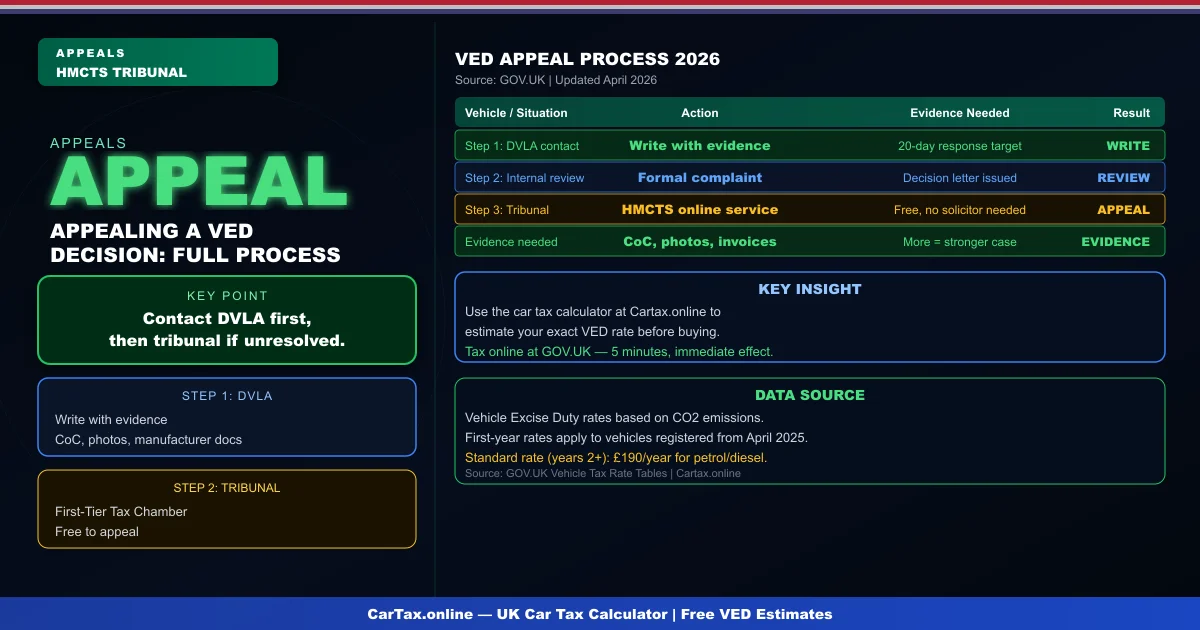
There are formal processes for challenging DVLA decisions about your road tax. Understanding the appeals hierarchy and what evidence to gather helps you resolve disputes efficiently.
Step 1: Contact DVLA First
Before any formal appeal, contact DVLA to discuss the issue. Many VED disputes arise from simple errors — wrong CO2 on the V5C, incorrect fuel type, wrong first registration date — that can be resolved by writing to DVLA with supporting evidence. Send your complaint in writing (email or post) to the SVB Query Team at DVLA, Swansea, SA99 1AR. Include your V5C reference number and all supporting documents. DVLA aims to respond within 20 working days.
Step 2: Request an Internal Review
If the initial contact does not resolve the issue, request a formal internal review of DVLA's decision. DVLA has a complaint handling process that allows you to escalate disputes. The internal review examines whether DVLA's original decision was correct based on the evidence provided. If the decision is upheld, DVLA will issue a decision letter that you can use as the basis for a tribunal appeal. This letter is a prerequisite for the First-Tier Tribunal process.
Step 3: First-Tier Tribunal (Tax Chamber)
If DVLA's internal review upholds the decision and you still disagree, you can appeal to the First-Tier Tribunal (Tax Chamber). This is a formal legal process run by HM Courts and Tribunals Service. You can submit your appeal online via the GOV.UK appeals service. The tribunal is independent of DVLA and a judge will review the evidence. You can represent yourself or use a solicitor, tax adviser or advocate. Tribunal hearings are usually held in person or by video. Related: How to Appeal a Road Tax Decision UK 2026 | Car Tax Appeals UK 2026 | Car Tax Appeals UK 2026 | Car Tax Appeals and Disputes UK 2026.
Gathering Evidence for a VED Appeal
Strong VED appeals rely on documentary evidence. The key documents to gather include: the Certificate of Conformity (CoC) showing the official CO2 rating, photographs of the fuel type label on the vehicle, manufacturer invoices or specifications, original registration documents from overseas (for imported vehicles), and correspondence from DVLA showing the disputed decision. The more specific and contemporaneous the evidence, the stronger the appeal. Witness statements can support cases where documentary evidence is limited.
Timeline and Costs
DVLA internal review typically takes 20-40 working days. First-Tier Tribunal processing can take 6-12 months from appeal to hearing. There is no fee to lodge a tribunal appeal — it is free. However, if you use a solicitor or tax adviser, their fees are at your own cost. If you win, DVLA may reimburse any costs you have incurred in certain circumstances. If you lose, each party typically bears their own costs. Consider whether the disputed amount justifies the time and effort of a tribunal appeal.
Official Resources: GOV.UK Check Vehicle Tax | GOV.UK Vehicle Tax | DVLA Online | MOT Check
Frequently Asked Questions
Q: How much is car tax (VED) in the UK 2026?
Car tax rates in the UK depend on your vehicle's CO2 emissions and list price. Standard rates start from £190 per year for petrol and diesel cars, with zero-rated VED for EVs. First-year rates vary from £0 to £2,605 depending on emissions. Additional premiums apply for vehicles over £40,000.
Q: How do I check if my car is taxed online?
You can check your vehicle's tax status for free on the Gov.uk website at gov.uk/check-vehicle-tax. You'll need your vehicle's registration number (number plate). You can also check via the Motor Insurance Database to verify road tax and insurance status simultaneously.
Q: Can I get a refund on car tax if I sell my vehicle?
Yes — if you sell or scrap your vehicle, you can claim a refund on any full months of remaining road tax. Contact DVLA with the V11 reminder letter or apply online at gov.uk. Refunds are usually processed within 4-6 weeks.
Q: Is road tax refund available when transferring ownership?
No — road tax does not transfer with the vehicle. When you sell your car, the tax is automatically cancelled and any remaining months are refunded to you by DVLA. The new owner must tax the vehicle immediately. As a buyer, always verify the vehicle's tax status before purchasing.
Q: What is the luxury car tax threshold in the UK 2026?
The additional rate for vehicles over £40,000 (list price) adds £410 per year to standard VED rates for years 2-6 of registration. This surcharge brings the annual cost for high-emission vehicles over £40,000 to around £600-690 per year. Pure EVs under £40,000 pay zero VED.