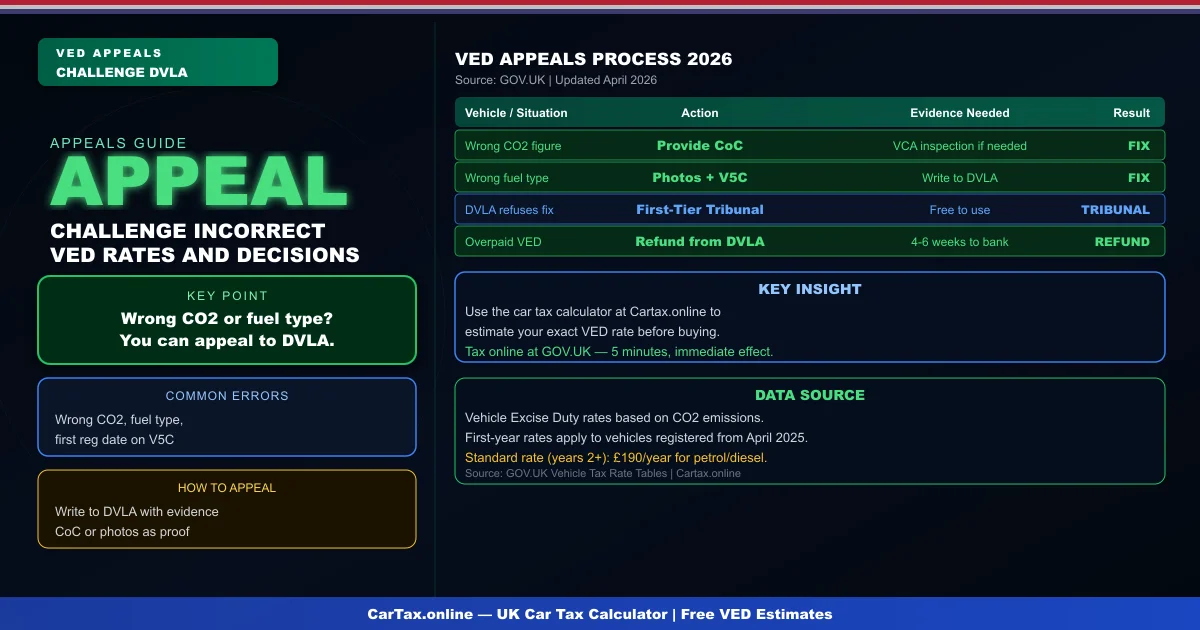
Errors in VED records happen more often than most people realise. Whether it is a wrong CO2 figure on the V5C, an incorrect fuel type, or a premium rate applied to the wrong vehicle, you have the right to challenge DVLA decisions and seek corrections.
Common VED Errors to Look For
The most frequent VED errors include incorrect CO2 emissions figures — particularly for imported vehicles or those with a history of modifications — wrong fuel type registrations, incorrect first registration dates that place a vehicle in the wrong first-year rate band, and premium rate surcharges applied to vehicles under the £40,000 list price threshold. Review your V5C against what you know to be true about your vehicle and check previous tax receipts against expected rates.
How to Report a VED Error to DVLA
To report a VED error, contact DVLA directly with evidence supporting your correction. For CO2 errors, provide a Certificate of Conformity (CoC) or VCA inspection report showing the correct figure. For fuel type errors, provide photographic evidence such as the fuel type label on the fuel cap or the vehicle's registration document from the country of origin (for imports). Write to DVLA at SVB Query Team, DVLA, Swansea, SA99 1AR or use the contact form on GOV.UK. Include your V5C reference number and evidence.
If You Have Paid Too Much VED
DVLA refunds overpaid VED where errors have been identified and corrected. If you have been paying a higher VED rate than you should, DVLA will refund the overpayment for the current tax year and adjust future renewals. The refund process takes four to six weeks and is paid by bank transfer if you have provided bank details, or by cheque otherwise. Keep copies of all correspondence with DVLA for your records. Related: Car Tax Appeals and Disputes UK 2026 | Car Tax Appeals UK 2026 | Car Tax Appeals UK 2026 | Avoid This Common Car Tax Error That Costs GBP1K.
The First-Tier Tribunal: Tax Appeals
If DVLA refuses to correct an error or you disagree with a decision about your VED classification, you can appeal to the First-Tier Tribunal (Tax Chamber). This is a formal legal process where an independent judge reviews DVLA's decision. You must have exhausted DVLA's internal complaint process before appealing to the tribunal. The tribunal process is free to use, and you can represent yourself or use a solicitor or tax adviser.
Vehicle Excise Duty Appeals: What Wins
Successful VED appeals typically rely on documentary evidence: a CoC showing the correct CO2, photos of the fuel type, an invoice for the correct specification, or records from the manufacturer. Appeals based on misunderstanding of the rules — such as believing a vehicle qualifies for a historic exemption when it does not — are unlikely to succeed. Consult a vehicle tax specialist or solicitor if the disputed amount is large enough to warrant professional advice.
Frequently Asked Questions
Q: How much is car tax (VED) in the UK 2026?
Car tax rates in the UK depend on your vehicle's CO2 emissions and list price. Standard rates start from £190 per year for petrol and diesel cars, with zero-rated VED for EVs. First-year rates vary from £0 to £2,605 depending on emissions. Additional premiums apply for vehicles over £40,000.
Q: How do I check if my car is taxed online?
You can check your vehicle's tax status for free on the Gov.uk website at gov.uk/check-vehicle-tax. You'll need your vehicle's registration number (number plate). You can also check via the Motor Insurance Database to verify road tax and insurance status simultaneously.
Q: Can I get a refund on car tax if I sell my vehicle?
Yes — if you sell or scrap your vehicle, you can claim a refund on any full months of remaining road tax. Contact DVLA with the V11 reminder letter or apply online at gov.uk. Refunds are usually processed within 4-6 weeks.
Q: Is road tax refund available when transferring ownership?
No — road tax does not transfer with the vehicle. When you sell your car, the tax is automatically cancelled and any remaining months are refunded to you by DVLA. The new owner must tax the vehicle immediately. As a buyer, always verify the vehicle's tax status before purchasing.
Q: What is the luxury car tax threshold in the UK 2026?
The additional rate for vehicles over £40,000 (list price) adds £410 per year to standard VED rates for years 2-6 of registration. This surcharge brings the annual cost for high-emission vehicles over £40,000 to around £600-690 per year. Pure EVs under £40,000 pay zero VED.