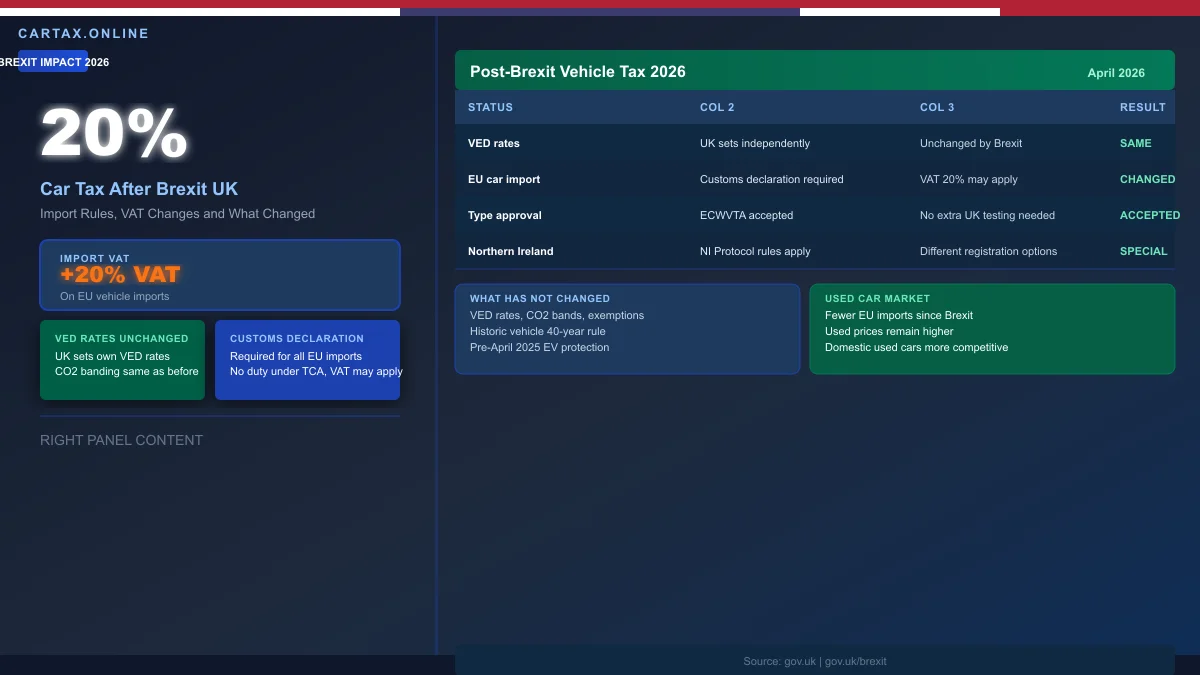
April 13, 2026 in United Kingdom — Brexit has affected many aspects of UK vehicle taxation, particularly for drivers buying or importing vehicles from the EU. Understanding how post-Brexit rules work can help you avoid unexpected costs and take advantage of any new opportunities. This guide covers how vehicle taxation has changed since Brexit and what it means for UK drivers in 2026.
How Brexit Changed Vehicle Tax Rules
Since January 1, 2021, the UK has operated a fully independent vehicle taxation system separate from the EU. While the core VED rates and structure remain similar, the key changes affect imported vehicles from the EU and Northern Ireland, customs duties on vehicle imports, and VAT rules for cross-border transactions.
Importing a Car from the EU: What Changed
Post-Brexit, importing a vehicle from an EU country involves customs procedures that did not exist before. Key changes:
- Customs declaration: Every vehicle imported from the EU must be declared to HMRC, even if no duty is owed
- VAT on imports: EU vehicles imported into the UK may be subject to VAT at 20% on the purchase price, depending on the circumstances
- Type approval: EU-approved vehicles (with ECWVTA) are accepted without additional UK-specific testing — the UK has maintained mutual recognition of EU vehicle type approvals
- Import duty: No additional import duty applies to vehicles from the EU under the EU-UK Trade and Cooperation Agreement, but VAT may still apply
VAT on EU Vehicle Imports
The VAT treatment of EU vehicle imports depends on whether you are a private buyer or a business: Related: Car Tax After Brexit UK 2026 | How to Tax a Car UK 2026 | Car Tax Refund UK 2026 | UK Car Tax Bands 2026.
- Private buyer importing from EU: You pay UK VAT (20%) on the vehicle's value at the point of import. If you have already paid VAT in the EU country, you may be able to reclaim it there, but UK VAT is still due.
- Business importing from EU: VAT registration allows input tax recovery on imports. The vehicle goes through customs with VAT accounted for under the post-Brexit procedures.
Northern Ireland Vehicle Tax Rules
Vehicles registered in Northern Ireland can use EU-style registration and tax systems due to the Northern Ireland Protocol. This means NI-registered vehicles may have some different arrangements compared to GB-registered vehicles. However, road tax (VED) for NI vehicles follows the same UK rates as vehicles registered in Great Britain.
EU Vehicles Registered in the UK
If you have an EU-registered vehicle that you want to use permanently in the UK, you must:
- Register the vehicle with the DVLA
- Pay UK first-year road tax based on CO2 emissions
- Pay any applicable import VAT and customs charges
- Obtain UK vehicle approval (IVA or ECWVTA if not already approved)
Pre-registered and Stock Vehicles
Dealers may import vehicles that have been pre-registered in the EU (often called 'parallel imports' or 'grey imports'). These vehicles may have different specifications (e.g., right-hand drive vs left-hand drive) that affect their suitability for UK roads. Pre-registered vehicles are subject to the same import VAT rules as new imports.
What Has Not Changed Post-Brexit
- VED rates: UK road tax rates are set by the UK government independently and have not changed due to Brexit
- CO2 banding structure: The CO2-based VED system remains the same
- Historic vehicle exemption: 40-year rule remains unchanged
- Disability exemption: Unchanged by Brexit
- Pre-April 2025 EV grandfather protection: Unchanged
Buying a UK Vehicle and Exporting to the EU
If you buy a vehicle in the UK and export it to the EU, you may be eligible for VAT zero-rating on the export. However, the EU will impose its own import VAT and possibly customs duties when the vehicle arrives. This is a consideration for UK residents relocating to the EU.
Impact on Used Car Prices
Post-Brexit import complexity has reduced the flow of vehicles from the EU to the UK, contributing to a shortage of certain models in the used car market. This has helped sustain used car prices at higher levels than might otherwise have been expected. For UK buyers, this means importing from the EU is less attractive — making domestic-used vehicles relatively more competitive.
Conclusion
Brexit has introduced customs procedures and potential VAT costs for EU vehicle imports, but has not changed the core UK VED system. UK road tax rates, CO2 bands, and exemptions remain unchanged by Brexit. Importing from the EU now requires a customs declaration and may involve VAT — making domestic-used vehicles more attractive relative to pre-Brexit. Use GOV.UK importing a vehicle guidance for detailed import procedures.
Frequently Asked Questions
Q: How much is car tax (VED) in the UK 2026?
Car tax rates in the UK depend on your vehicle's CO2 emissions and list price. Standard rates start from £190 per year for petrol and diesel cars, with zero-rated VED for EVs. First-year rates vary from £0 to £2,605 depending on emissions. Additional premiums apply for vehicles over £40,000.
Q: How do I check if my car is taxed online?
You can check your vehicle's tax status for free on the Gov.uk website at gov.uk/check-vehicle-tax. You'll need your vehicle's registration number (number plate). You can also check via the Motor Insurance Database to verify road tax and insurance status simultaneously.
Q: Can I get a refund on car tax if I sell my vehicle?
Yes — if you sell or scrap your vehicle, you can claim a refund on any full months of remaining road tax. Contact DVLA with the V11 reminder letter or apply online at gov.uk. Refunds are usually processed within 4-6 weeks.
Q: Is road tax refund available when transferring ownership?
No — road tax does not transfer with the vehicle. When you sell your car, the tax is automatically cancelled and any remaining months are refunded to you by DVLA. The new owner must tax the vehicle immediately. As a buyer, always verify the vehicle's tax status before purchasing.
Q: What is the luxury car tax threshold in the UK 2026?
The additional rate for vehicles over £40,000 (list price) adds £410 per year to standard VED rates for years 2-6 of registration. This surcharge brings the annual cost for high-emission vehicles over £40,000 to around £600-690 per year. Pure EVs under £40,000 pay zero VED.