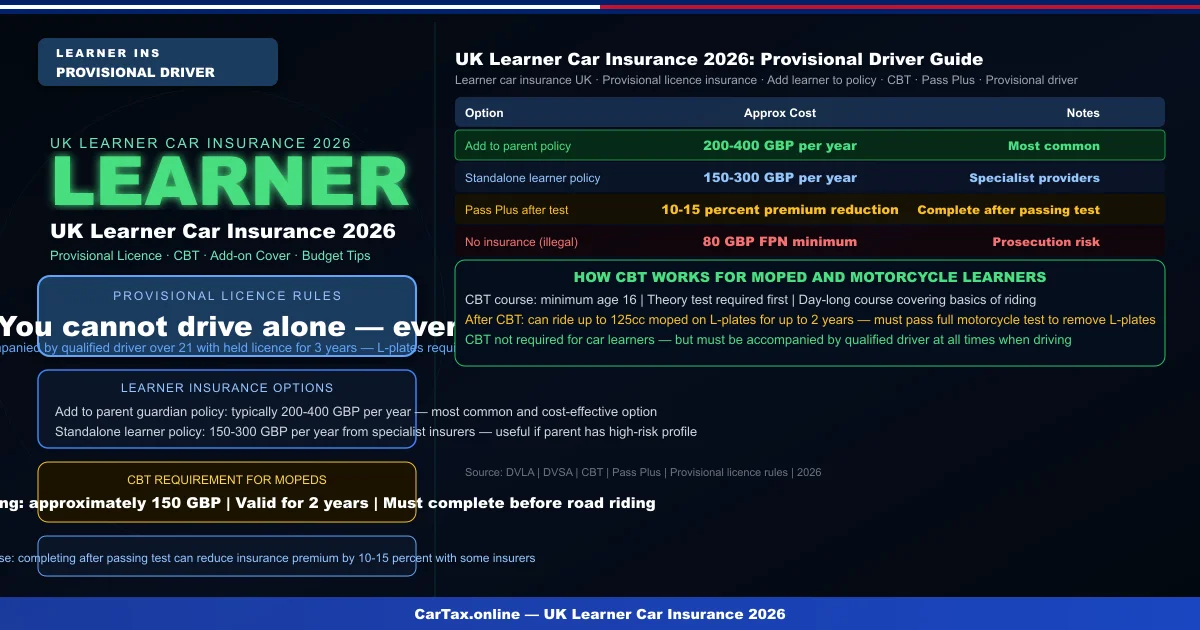
Learner car insurance is a specialised category of motor cover for provisional licence holders who are learning to drive. Understanding the options available, from pay-as-you-go hourly policies to adding a learner to an existing policy, helps new drivers and their families find the most appropriate and cost-effective cover.
Provisional Licence Insurance Requirements
All provisional licence holders must be insured to drive on public roads, even during lessons with an instructor. Driving without valid insurance is illegal and can result in fines, vehicle seizure and prosecution. Learner drivers have several options for obtaining insurance: adding them to a parent or guardian's existing policy as a named driver, purchasing a dedicated learner-specific policy, or taking professional driving lessons where the driving school provides insurance.
Adding a learner to an existing policy as a named driver is often the most cost-effective option for family learning arrangements, though it may increase the main policyholder's premium on renewal depending on the insurer's policy.
Dedicated Learner Insurance Policies
Specialist learner insurance providers including Marmalade, InsureforLearner and Tempcover offer policies designed specifically for provisional licence holders. These range from hourly pay-as-you-go policies (from 5 to 10 GBP per hour) to daily, weekly and annual learner policies. Hourly policies are particularly popular with learner drivers who want to practice between professional lessons. Related: UK Car Insurance Teenager 2026 | Canada Car Insurance Tax 2026 | Car Insurance Tax India 2026 — GST & Income Tax Benefits | Car Insurance UAE 2026.
Annual learner policies typically cost 300 to 600 GBP per year, providing cover throughout the learning period until test success. These are competitive with the cost of adding a learner to a standard policy for families who anticipate a full year of learning.
Costs for New Drivers After Passing
Newly qualified drivers aged under 25 face the highest insurance premiums of any driver demographic, with average annual premiums of 1,300 to 1,800 GBP in 2026. This is due to statistically high accident rates among newly qualified young drivers. Premiums reduce significantly after five claim-free years, potentially falling to 500 to 800 GBP at age 25 to 30 with maximum No Claims Bonus.
Telematics black box policies are particularly effective for new drivers, offering 20 to 40 percent premium reductions for careful drivers. Marmalade, Co-operative Insurance and several other providers offer specialist new driver policies with telematics as standard.
P Plate Insurance Considerations
P plates (probationary plates) indicate to other road users that a driver is newly qualified, and while they carry no legal obligation, they may slightly increase the likelihood of being stopped by police for document checks. Insurance for P-plate drivers is the same as for any newly qualified driver, with no specific P-plate insurance product existing as a distinct category.
Frequently Asked Questions
Can I drive with just a provisional licence? No. You must have valid insurance and be accompanied by someone aged over 21 who has held a full UK driving licence for at least three years. Professional driving instructors with dual controls are exempt from the three-year rule.
How much does learner car insurance cost? Hourly pay-as-you-go policies start from 5-10 GBP per hour. Annual learner policies cost 300-600 GBP per year. Adding a learner to a parent's policy may increase the annual premium by 200-500 GBP depending on insurer.
Official Resources: GOV.UK Check Vehicle Tax | GOV.UK Vehicle Tax | DVLA Online | MOT Check
Frequently Asked Questions
Q: How much is car tax (VED) in the UK 2026?
Car tax rates in the UK depend on your vehicle's CO2 emissions and list price. Standard rates start from £190 per year for petrol and diesel cars, with zero-rated VED for EVs. First-year rates vary from £0 to £2,605 depending on emissions. Additional premiums apply for vehicles over £40,000.
Q: How do I check if my car is taxed online?
You can check your vehicle's tax status for free on the Gov.uk website at gov.uk/check-vehicle-tax. You'll need your vehicle's registration number (number plate). You can also check via the Motor Insurance Database to verify road tax and insurance status simultaneously.
Q: Can I get a refund on car tax if I sell my vehicle?
Yes — if you sell or scrap your vehicle, you can claim a refund on any full months of remaining road tax. Contact DVLA with the V11 reminder letter or apply online at gov.uk. Refunds are usually processed within 4-6 weeks.
Q: Is road tax refund available when transferring ownership?
No — road tax does not transfer with the vehicle. When you sell your car, the tax is automatically cancelled and any remaining months are refunded to you by DVLA. The new owner must tax the vehicle immediately. As a buyer, always verify the vehicle's tax status before purchasing.
Q: What is the luxury car tax threshold in the UK 2026?
The additional rate for vehicles over £40,000 (list price) adds £410 per year to standard VED rates for years 2-6 of registration. This surcharge brings the annual cost for high-emission vehicles over £40,000 to around £600-690 per year. Pure EVs under £40,000 pay zero VED.