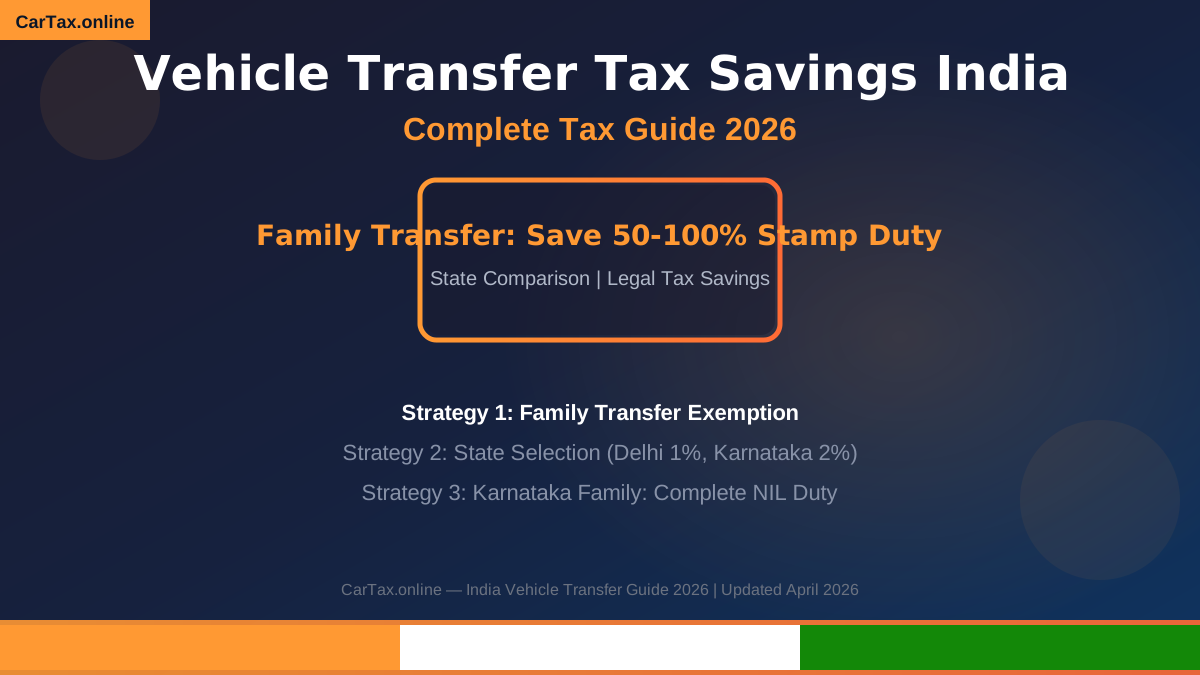
Vehicle ownership transfer in India involves costs that can be significantly reduced through proper planning and legal tax-saving strategies. Understanding stamp duty rates, family transfer benefits, and state-specific exemptions helps minimize transfer expenses. This comprehensive guide covers every tax-saving opportunity available during vehicle ownership transfer for 2026.
Understanding Vehicle Transfer Tax Components
Vehicle transfer costs consist of multiple components, each with different tax-saving opportunities.
Stamp Duty
Stamp duty is the largest transfer cost component. It is calculated as a percentage of the vehicle's declared value or fair market value, whichever is higher. State governments set stamp duty rates, which vary significantly across India.
RTO Fees
RTO fees are standardized government charges that apply uniformly across states. These are not subject to reduction through tax-saving strategies — only the statutory fees apply.
Insurance and Other Costs
Insurance costs are not part of the transfer tax but should be considered in overall ownership transfer planning. The existing insurance can be transferred or cancelled for refund.
State-Wise Stamp Duty Rates
Stamp duty varies dramatically between states, creating opportunities for tax savings through state selection where applicable.
Lowest Stamp Duty States
These states have the lowest stamp duty for vehicle transfer:
- Delhi: 1% for cars, 0.5% for two-wheelers
- West Bengal: 1% for cars, 0.5% for two-wheelers
- Karnataka: 2% for cars, 1% for two-wheelers
- Uttar Pradesh: 2% for cars, 1% for two-wheelers
Highest Stamp Duty States
These states have higher stamp duty rates:
- Maharashtra: 4% for cars, 2% for two-wheelers
- Tamil Nadu: 4% for cars, 2% for two-wheelers
- Gujarat: 3.5% for cars, 1.5% for two-wheelers
Stamp Duty Comparison Table
For a INR 5 lakh car:
- Delhi: INR 5,000 (INR 2,500 for family)
- West Bengal: INR 5,000
- Karnataka: INR 10,000 (NIL for family)
- Uttar Pradesh: INR 10,000 (possible exemption for family)
- Maharashtra: INR 20,000 (INR 10,000 for family)
- Tamil Nadu: INR 20,000 (INR 10,000 for family)
Family Transfer Stamp Duty Benefits
Transfers to immediate family members qualify for stamp duty reductions or exemptions in most states.
Family Definition
Immediate family typically includes: spouse, children (son/daughter), parents, and siblings (brother/sister). Some states may include grandparents and grandchildren.
Karnataka: Complete Exemption
Karnataka provides complete stamp duty exemption for transfers to immediate family members. For a INR 10 lakh car, this saves INR 2,00,000 compared to non-family transfer. This is the most generous family transfer benefit in India.
Delhi: 50% Reduction
Delhi reduces stamp duty by 50% for family transfers. A 1% rate becomes 0.5%, making family transfers significantly cheaper than non-family transfers.
Maharashtra: 50% Reduction
Maharashtra reduces stamp duty by 50% for family transfers. The 4% rate for cars becomes 2%, saving INR 10,000 on a INR 5 lakh car.
Tamil Nadu: 50% Reduction
Tamil Nadu follows Maharashtra's pattern with 50% reduction for family transfers. The 4% rate becomes 2% for immediate family.
Documenting Family Relationship
To claim family transfer benefits, document the relationship through: Aadhaar cards showing same family name or address, school records for parent-child verification, ration cards, birth certificates, and self-declaration if other documents are insufficient.
Strategic Tax Savings Approaches
Timing Transfers for Tax Benefits
Some states announce temporary exemption schemes during specific periods. Monitor state transport department announcements for any limited-time tax benefits.
State Selection for Transfer
When possible (such as when no immediate buyer is waiting), consider the state where transfer occurs. Transferring in Karnataka or Delhi results in significantly lower stamp duty than Maharashtra or Tamil Nadu.
Avoiding Undervaluation
While tempting to undervalue vehicles to reduce stamp duty, this can backfire. RTO officers may reassess based on fair market value, causing delays and additional payments. Declare a realistic market value to avoid reassessment.
Genuine Gifts vs Sales
Genuine gifts between family members (no monetary consideration) may have different treatment in some states. If the transfer is truly without consideration, document it as a gift deed rather than a sale agreement.
Interstate Transfer Tax Considerations
Interstate transfers involve additional tax considerations.
Original State Road Tax
Some states offer partial refund of road tax when a vehicle permanently leaves the state. Check with the original state's transport department for refund eligibility.
New State Road Tax
The destination state requires road tax payment based on its rates. This is a new tax obligation, not a transfer of the old tax. Plan for this additional cost in interstate transfers.
Tax Double-Check
Ensure no double taxation occurs where both states claim road tax for the same period. Verify the original state's tax coverage end date and the new state's start date.
Loan-Based Transfer Tax Savings
Transfers involving vehicle loans have specific considerations.
Foreclosure Charges
If repaying a loan as part of the transfer, check for foreclosure charges. Some banks waive foreclosure charges after a minimum period. Negotiate with the bank or choose a bank with minimal charges.
NOC Charges
Banks charge for NOC issuance. These charges add to transfer costs. Compare NOC charges across banks when clearing loans for transfer.
Insurance Tax Savings
Insurance-related tax savings are possible during vehicle transfer.
No-Claim Bonus Preservation
If cancelling existing insurance, preserve your accumulated no-claim bonus. This reduces future insurance premiums on your next vehicle — a significant long-term saving.
NCB Certificate
Request an NCB certificate from your insurer upon cancellation. This certificate allows you to claim the NCB discount on your next vehicle's insurance.
Total Cost Comparison by State
For a INR 5 lakh car to a non-family buyer:
- Delhi: ~INR 7,800-9,000 (stamp duty INR 5,000)
- West Bengal: ~INR 7,800-9,000 (stamp duty INR 5,000)
- Karnataka: ~INR 12,800-14,000 (stamp duty INR 10,000)
- Uttar Pradesh: ~INR 12,800-14,000 (stamp duty INR 10,000)
- Gujarat: ~INR 20,300-22,000 (stamp duty INR 17,500)
- Maharashtra: ~INR 22,800-24,000 (stamp duty INR 20,000)
- Tamil Nadu: ~INR 22,800-24,000 (stamp duty INR 20,000)
For the same car to a family member in Karnataka: ~INR 2,800-4,000 (NIL stamp duty)
Conclusion
Significant tax savings are available during vehicle transfer through proper planning. Key strategies include: claiming family transfer stamp duty exemptions (Karnataka offers complete exemption), choosing states with lower stamp duty rates where possible, documenting family relationships to claim all applicable reductions, avoiding undervaluation that triggers RTO reassessment, and preserving no-claim bonus for future insurance savings. Karnataka is the most cost-effective state for family transfers with complete stamp duty exemption. Delhi and West Bengal offer the lowest standard rates at 1%. Use these strategies to minimize your vehicle ownership transfer costs.