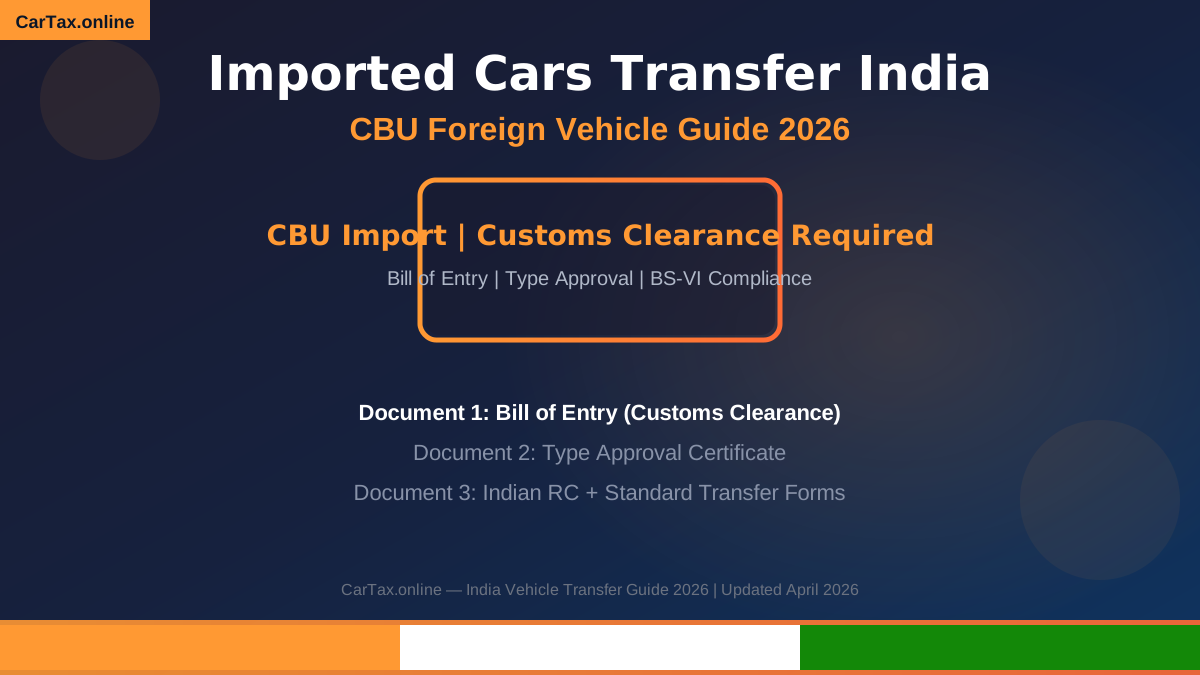
Transferring ownership of imported cars in India involves additional documentation and compliance requirements beyond standard vehicle transfers. Imported vehicles, whether CBU (Completely Built Unit) imports or older foreign vehicles brought into India, have specific registration and transfer requirements. Understanding these requirements helps ensure a smooth ownership transfer for 2026.
Understanding Imported Vehicle Categories
India has different categories of imported vehicles, each with specific transfer requirements.
CBU Imports
CBU (Completely Built Unit) imports are new vehicles imported from foreign manufacturers and sold in India. These vehicles have full customs clearance, type approval, and Indian registration before first sale. Their transfer process is similar to domestic vehicles but with comprehensive customs documentation.
Re-Imported Vehicles
Vehicles originally exported from India and later re-imported have specific customs procedures. These must clear customs again upon re-entry and may have additional compliance requirements.
Personal Import Vehicles
Vehicles imported for personal use have specific rules about transferability. Some personal import permits have conditions on resale. Understanding these conditions is essential before purchasing or selling such vehicles.
Documentation Requirements for Imported Vehicle Transfer
Imported vehicle transfers require extensive documentation establishing the vehicle's legal status.
Essential Documents
- Original Registration Certificate (RC) — Indian registration
- Form 29 and Form 30 — standard transfer forms
- Bill of Entry — customs clearance document
- Customs Duty Payment Receipt — proof of duty paid
- Type Approval Certificate — from authorized testing agency
- Import License (if applicable)
- Certificate of Compliance — with Indian standards
- Valid Insurance and PUC
- Sale Agreement on stamp paper
- Buyer's and seller's identity and address proofs
Bill of Entry
The Bill of Entry is the primary customs clearance document. It establishes that the vehicle has cleared Indian customs, shows the customs duty paid, and provides the vehicle's identification details. Without this document, the vehicle may be considered smuggled or improperly imported.
Type Approval Certificate
Imported vehicles must have type approval from authorized testing agencies like iCAT (International Centre for Automotive Technology) or ARAI (Automotive Research Association of India). This certificate confirms the vehicle meets Indian safety and emission standards.
Transfer Process for Imported Vehicles
The transfer process follows standard procedures with additional verification steps.
Step 1: Document Verification
Before proceeding with transfer, verify all customs and import documentation is complete. The seller should provide the original Bill of Entry, type approval certificate, and current RC. Any missing documents should be obtained before initiating transfer.
Step 2: Sale Agreement
Prepare the sale agreement on stamp paper with applicable stamp duty. The declared value for stamp duty may include the vehicle's import value, making the stamp duty higher than domestic vehicles of equivalent market value.
Step 3: Form 29 and Form 30
Complete Form 29 and Form 30 as with standard transfers. The forms require the same information — vehicle details, seller details, buyer details, and signatures. Ensure all details match the RC.
Step 4: RTO Submission
Visit the RTO with all documents. The RTO officer may request additional verification of customs documentation for imported vehicles. Present the Bill of Entry, type approval, and other customs documents for verification.
Step 5: Fee Payment and Processing
Pay standard transfer fees (INR 300 for cars) and applicable stamp duty. The RTO processes the application, which may take longer than standard transfers due to additional documentation verification.
Stamp Duty for Imported Vehicles
Stamp duty calculation for imported vehicles considers their higher declared values.
Value Calculation
The stamp duty base includes the vehicle's CIF (Cost, Insurance, Freight) value, customs duty paid, and other associated costs. This typically results in higher stamp duty than comparable domestic vehicles. State rates apply (1-4% depending on state), but the higher base value increases the total cost.
Family Transfer Benefits
Family transfer stamp duty reductions apply to imported vehicles as well. If transferring to an immediate family member, claim the applicable reduction with proper documentation establishing the relationship.
Special Considerations for Imported Vehicle Transfer
BS-VI Compliance
New imports into India must comply with current BS-VI emission standards. Older imported vehicles may face restrictions or additional compliance requirements depending on when they were imported and their emission standard classification.
Age Restrictions
Some states have restrictions on vehicles above certain ages. Verify that the imported vehicle meets any applicable age restrictions before initiating transfer. Pre-BS-IV vehicles may face restrictions in some states.
Luxury and Premium Imports
Luxury imported cars often have higher declared values, resulting in higher stamp duty. However, their resale values in the Indian market may not reflect this. Consider market value when negotiating prices for imported luxury vehicles.
Spare Parts Availability
While not a transfer requirement, buyers of imported vehicles should verify spare parts and service availability. Some imported vehicles have limited service networks in India, affecting ongoing ownership costs.
Verifying Imported Vehicle Status
Before purchasing an imported vehicle, verify its status thoroughly.
Customs Documentation Check
Verify the Bill of Entry is genuine by checking with the customs authority. The document should have official seals, proper identification numbers, and consistent vehicle details. Fake or incomplete customs documents indicate potential smuggling or fraud.
Type Approval Validity
Confirm the type approval certificate is current and valid. Expired type approval may indicate the vehicle no longer meets compliance standards. Contact the issuing agency to verify authenticity.
Parivahan Verification
Check the vehicle's status on Parivahan. Imported vehicles should show standard registration details. Any discrepancies between Parivahan records and physical documents should be investigated.
Common Issues with Imported Vehicle Transfer
Missing Customs Documents
If the seller cannot produce the Bill of Entry or customs clearance documents, the vehicle may have been improperly imported. Do not proceed with such transfers — the vehicle could be seized by customs.
Customs Duty Disputes
If customs duty was not fully paid or there are disputes about the duty calculation, transfer may be blocked until resolved. Verify duty payment was complete from the Bill of Entry.
Type Approval Expiry
Type approval certificates have validity periods. If expired, the vehicle may not meet current standards. Re-certification may be required before transfer can proceed.
RC Discrepancies
Imported vehicles may have different identification number formats. Ensure chassis and engine numbers on all documents match. Any discrepancy requires investigation before transfer.
Tips for Imported Vehicle Buyers
Due Diligence
Imported vehicles require more extensive due diligence than domestic vehicles. Verify all customs documents, type approval, and compliance certificates before purchase. Consider engaging a professional inspection service.
Cost Considerations
Account for higher stamp duty, potentially limited service options, and possible spare parts challenges. Imported vehicles often cost more to maintain in India than domestically manufactured equivalents.
Documentation Organization
Imported vehicles have more documents than standard vehicles. Organize all documentation carefully — customs certificates, type approval, service records from foreign service centers if available, and all Indian registration documents.
Conclusion
Imported car transfer in India requires comprehensive documentation beyond standard transfers. Essential documents include the Bill of Entry proving customs clearance, type approval certificate confirming Indian standards compliance, standard Form 29 and Form 30, and valid RC. The transfer process follows standard RTO procedures with additional customs documentation verification. Stamp duty is calculated on the higher import-based declared value. Verify all customs documents before purchase — missing or incomplete customs clearance indicates potential legal issues. Imported vehicles can be legally transferred once all compliance requirements are met, but require more due diligence than domestic vehicles.