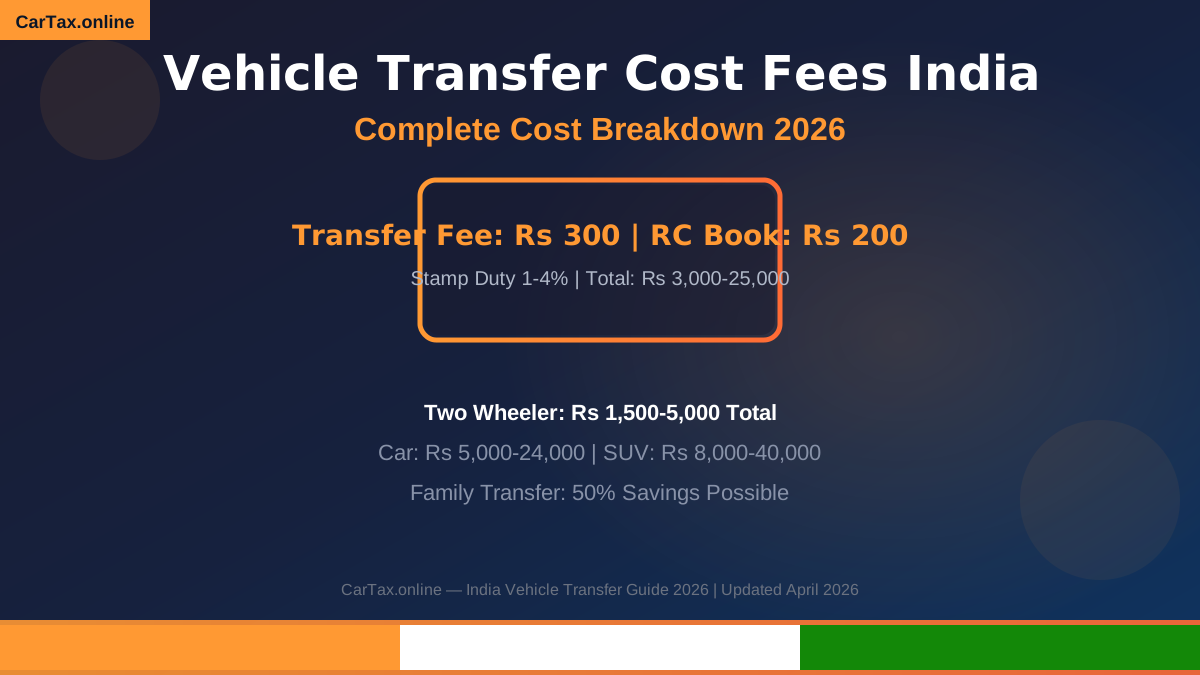
Understanding vehicle transfer costs and fees in India is essential for budgeting your ownership change correctly. The total cost of transferring a vehicle from one owner to another varies significantly based on the vehicle's value, the state where the transfer occurs, whether the transfer is to a family member, and whether the vehicle has an active loan. Breaking down each cost component helps you plan the transfer without unexpected expenses. This comprehensive guide covers every fee associated with vehicle ownership transfer in India for 2026.
Overview of Vehicle Transfer Costs in India
Vehicle transfer costs in India can be broadly divided into government fees (standardized across states), stamp duty (state-specific and the largest cost component), and incidental charges (bank NOCs, notarization, agents). For a standard car transfer, expect to pay between INR 8,000 and INR 25,000 in total, with stamp duty being the dominant cost factor. Family transfers can reduce costs significantly in most states through stamp duty concessions.
The actual cost depends heavily on your state, with stamp duty ranging from 1% in Delhi to 4% in Maharashtra and Tamil Nadu. Understanding these variations helps you plan and potentially negotiate transfers in a cost-effective manner.
RTO Transfer Fees (Government Fees)
RTO transfer fees are standardized government charges that apply across all states, though exact amounts may vary slightly.
Base Transfer Fees
The RTO transfer fees under the Central Motor Vehicles Rules are:
- Motorcars and jeeps: INR 300
- Two-wheelers: INR 200
- Three-wheelers and light motor vehicles: INR 300
- Medium goods vehicles: INR 400
- Heavy goods vehicles: INR 600
- Imported motor vehicles: INR 600
These fees apply uniformly across all states and union territories. They cover the administrative cost of processing the transfer application and updating the VAHAN database.
RC Book and Smart Card Fee
The Registration Certificate book or smart card fee covers the cost of producing and issuing the updated RC document:
- RC book (manual): INR 200
- RC smart card: INR 200-400 depending on state
Most states now issue smart card RCs which have a slightly higher fee than the older book-format certificates. The fee is charged for issuing the updated certificate in the new owner's name.
Inspection Fee
If the RTO officer calls for vehicle inspection during the transfer process, a nominal inspection fee may be charged:
- Vehicle inspection fee: INR 100-300 (varies by state and vehicle type)
Not all transfers require inspection — it depends on the RTO officer's judgment and whether there are concerns about the vehicle's documentation or condition. Older vehicles and vehicles with suspected documentation issues are more likely to be called for inspection.
Stamp Duty by State
Stamp duty is the largest variable cost in vehicle transfer and varies significantly by state. This is a state government tax on the transaction document.
Maharashtra
Maharashtra has some of India's highest vehicle stamp duty rates:
- Cars (four-wheelers): 4% of vehicle value
- Two-wheelers: 2% of vehicle value
- Family transfer cars: 2% (50% reduction)
- Family transfer two-wheelers: 1% (50% reduction)
For a INR 10 lakh car in Maharashtra, stamp duty is INR 40,000 (INR 20,000 for family transfer).
Karnataka
Karnataka offers competitive rates with family exemptions:
- Cars: 2% of vehicle value
- Two-wheelers: 1% of vehicle value
- Family transfers: Complete exemption (0%)
Karnataka's family exemption makes it one of the most cost-effective states for family vehicle transfers. For a INR 10 lakh car transferred to a family member, stamp duty is zero.
Delhi
Delhi has India's lowest stamp duty rates:
- Cars: 1% of vehicle value
- Two-wheelers: 0.5% of vehicle value
- Family transfer cars: 0.5% (50% reduction)
- Family transfer two-wheelers: 0.25% (50% reduction)
For a INR 10 lakh car in Delhi, stamp duty is INR 10,000 (INR 5,000 for family transfer).
Tamil Nadu
Tamil Nadu follows Maharashtra's higher rate structure:
- Cars: 4% of vehicle value
- Two-wheelers: 2% of vehicle value
- Family transfers: 2% (50% reduction)
Gujarat
Gujarat has moderate stamp duty rates:
- Cars: 3.5% of vehicle value
- Two-wheelers: 1.5% of vehicle value
- Family transfers: Concessions available (varies)
Uttar Pradesh
UP has competitive rates:
- Cars: 2% of vehicle value
- Two-wheelers: 1% of vehicle value
- Family transfers: Exemption available with proper documentation
West Bengal
West Bengal has low rates similar to Delhi:
- Cars: 1% of vehicle value
- Two-wheelers: 0.5% of vehicle value
State-Wise Stamp Duty Comparison Table
For a INR 5 lakh car, approximate stamp duty costs by state:
- Delhi: INR 5,000 (INR 2,500 family)
- West Bengal: INR 5,000
- Karnataka: INR 10,000 (NIL family)
- Uttar Pradesh: INR 10,000 (NIL family)
- Gujarat: INR 17,500
- Maharashtra: INR 20,000 (INR 10,000 family)
- Tamil Nadu: INR 20,000 (INR 10,000 family)
Stamp Paper and Agreement Costs
The physical stamp paper required for the sale agreement or gift deed has its own cost:
- Stamp paper cost: INR 20-100 (varies by state and document value)
Purchase stamp paper from licensed vendors. The cost is relatively minor compared to stamp duty but still part of the total transfer cost. Ensure you purchase from authorized vendors to avoid invalid documents.
Bank NOC and Hypothecation Charges
If the vehicle has an active loan (hypothecation), additional charges apply for clearing the encumbrance.
NOC Issuance Charges
Banks charge for issuing the No Objection Certificate:
- Standard NOC fee: INR 500-2,000 (varies by bank)
Some banks charge this fee to cover administrative costs of verifying loan closure and issuing the NOC document.
Loan Foreclosure Charges
Depending on the loan terms, early repayment may incur charges:
- Foreclosure charge: INR 0-10,000 (varies by bank and loan product)
- Many banks: No foreclosure charge after 12-24 months
- Some banks: 2-5% of outstanding amount as prepayment penalty
Check your loan agreement for foreclosure terms before arranging the loan clearance for transfer.
Form 35 Fee
Form 35 is the application for termination of hypothecation:
- Form 35 processing: INR 200-500 (RTO fee)
Power of Attorney Costs
If the seller cannot be present at the RTO, power of attorney costs apply:
- Stamp paper for PoA: INR 20-100
- Notary charges: INR 100-500
- PoA registration (if required): INR 100-500
- Total PoA cost: INR 300-1,500
Agent and Middleman Fees
While not mandatory, some buyers and sellers use agents to handle the transfer process:
- Agent fee: INR 500-3,000 (negotiable)
- Full service agent: INR 2,000-5,000 (includes document preparation)
Agents can be helpful for first-time transfer or when time is limited, but the process is straightforward enough to handle independently with proper documentation.
Total Cost Calculator by State
For a INR 5 lakh car, total transfer costs by state (excluding agent fees):
Non-Family Transfer (Stranger to Stranger)
- Delhi: INR 7,800-9,000
- West Bengal: INR 7,800-9,000
- Karnataka: INR 12,800-14,000
- Uttar Pradesh: INR 12,800-14,000
- Gujarat: INR 20,300-22,000
- Maharashtra: INR 22,800-24,000
- Tamil Nadu: INR 22,800-24,000
Family Transfer
- Karnataka: INR 2,800-4,000 (best value)
- Delhi: INR 5,300-6,500
- Maharashtra: INR 12,800-14,000
- Tamil Nadu: INR 12,800-14,000
Two-Wheeler Transfer Costs
For two-wheelers (motorcycles, scooters), transfer costs are lower:
- RTO transfer fee: INR 200
- RC book fee: INR 200
- Stamp duty (varies by state): 0.5-2% of vehicle value
- Total for INR 80,000 bike in Delhi: Approximately INR 800-1,500
- Total for INR 80,000 bike in Karnataka: Approximately INR 800-1,500 (NIL for family)
How to Minimize Transfer Costs
Choose Family Transfer When Possible
If the transfer is to a family member, always claim the family transfer stamp duty reduction or exemption. This alone can save INR 5,000-20,000 on a car transfer. Karnataka offers complete exemption for family transfers — the best deal in India.
Clear Challans Before Transfer
Outstanding traffic challans can complicate transfer and add to costs. Check and clear all pending fines before initiating the transfer process.
Handle Transfer Without Agents
The transfer process is straightforward with proper documentation. Skip the agent and handle it yourself to save INR 500-3,000. Use the RTO's official website for appointment booking and form downloads.
Use Karnataka for Family Transfers
If you have flexibility in where the transfer occurs (for family transfers), Karnataka's complete stamp duty exemption makes it the most cost-effective state. This applies only if the vehicle is registered in Karnataka or can be transferred there.
Hidden Costs to Watch For
Delays Causing Extended Insurance Costs
If transfer delays extend over weeks, you may need to renew insurance or maintain coverage longer than expected. Factor in potential insurance renewal costs if processing times are long.
Vehicle Inspection Issues
If inspection reveals issues (illegal modifications, number plate problems, etc.), fixing these adds to costs. Prepare the vehicle properly before transfer — ensure standard number plates, no visible modifications, and basic roadworthiness.
RC Correction Costs
If the RC has errors (spelling mistakes, outdated address), corrections cost additional fees. Verify RC accuracy before the sale and arrange corrections before transfer if needed.
Conclusion
Vehicle transfer costs in India include RTO fees (INR 500-1,000), stamp duty (1-4% of vehicle value), and incidental charges (bank NOC INR 500-2,000, PoA INR 300-1,500 if applicable). For a INR 5 lakh car, total transfer cost ranges from INR 8,000 (Delhi, non-family) to INR 25,000 (Maharashtra, non-family). Family transfers significantly reduce costs in most states — Karnataka offers complete stamp duty exemption for family transfers, making it the most cost-effective state at approximately INR 3,000-4,000 total for a INR 5 lakh car. Plan for stamp duty as the dominant cost, clear all traffic challans beforehand, and handle the process independently to avoid agent fees. Use the fee breakdown in this guide to budget accurately for your vehicle ownership transfer.