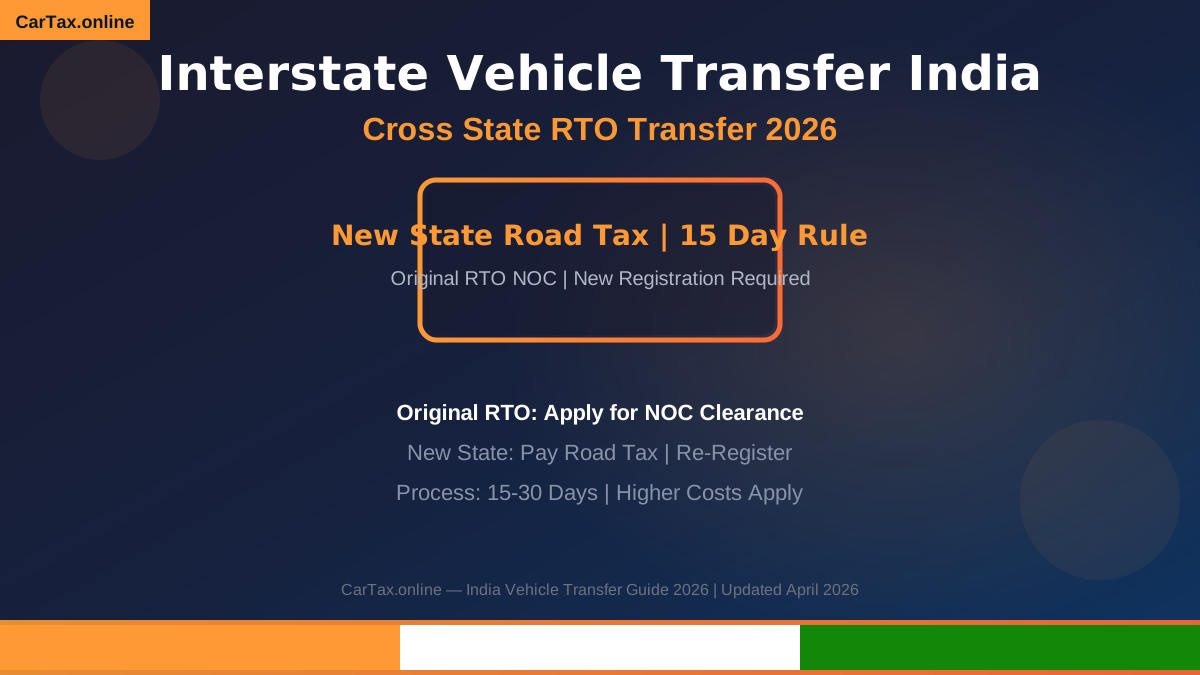
Interstate vehicle transfer in India — moving a vehicle from one state to another and completing the ownership or registration change — is significantly more complex than within-state transfers. Each state has its own registration system, road tax structure, and rules. Understanding the interstate transfer process is essential for anyone relocating, buying a vehicle in another state, or selling to someone in a different state for 2026.
Understanding Interstate Vehicle Transfer in India
Interstate vehicle transfer differs from standard within-state transfer in several fundamental ways. The vehicle's registration belongs to one specific state, and transferring it to another state requires formal clearance from the original state, re-registration in the new state, and road tax adjustments. This process applies whether you are selling the vehicle to someone in another state or moving yourself and transferring the vehicle to your new state's registration.
The complexity arises from the fact that road tax is paid to the state where the vehicle is registered. When the vehicle moves to a new state, the new state requires its own road tax. The original state's tax may or may not be refundable, creating potential double-taxation scenarios. Each state also has its own registration fees, stamp duty (where applicable), and documentation requirements.
When Interstate Transfer Is Required
Several scenarios require interstate vehicle transfer procedures.
Relocation to Another State
When you move to another state permanently, your vehicle must eventually be re-registered in the new state. While there is typically a grace period (12 months), you must eventually register the vehicle in your new state to legally continue using it there. The vehicle should be registered in the state where it is primarily used and where you have established residence.
Buying a Vehicle from Another State
When purchasing a vehicle registered in another state, you can either complete an interstate transfer (change registration to your state) or use the vehicle under the original registration with proper documentation. Using the original registration indefinitely may invite questions about vehicle taxation and primary usage location.
Selling a Vehicle to Someone in Another State
When selling a vehicle to a buyer in another state, the ownership transfer must be followed by interstate transfer procedures. The buyer obtains NOC from the original state and completes re-registration in their state. Both the ownership transfer and the interstate registration change must be completed.
Step-by-Step Interstate Transfer Process
Step 1: Obtain NOC from Original State RTO
The first step for interstate transfer is obtaining a No Objection Certificate from the RTO where the vehicle is currently registered. The NOC confirms the original state has no objection to the vehicle being registered in another state. To obtain NOC: apply at the original RTO with a written application, provide valid reasons for the transfer (permanent relocation, sale to out-of-state buyer), submit RC, identity proof, address proof of new state (or buyer's details), clear any pending traffic challans, and pay applicable NOC fee.
The NOC is typically issued within 7-15 working days. For permanent relocation, the NOC application should mention the intended new state of registration. For sales, the NOC can be issued in the buyer's name.
Step 2: Address Any Hypothecation
If the vehicle has an active loan (hypothecation), the loan must be cleared before interstate transfer can proceed. The bank NOC and hypothecation removal using Form 35 must be obtained before applying for interstate NOC. A vehicle with an active loan cannot be registered in another state without the bank's consent.
Step 3: Submit Application at New State RTO
With the NOC from the original state, submit an application at the destination state's RTO for re-registration. The application includes: NOC from original state, original RC, proof of new residence (address proof in new state), identity proof, valid insurance, valid PUC, and application for new registration number in the new state.
Step 4: Pay Road Tax to New State
The new state RTO will require payment of road tax based on the vehicle's current value and remaining useful life. Road tax in the new state is calculated differently from the original state. Some states adjust the road tax by crediting the tax already paid to the original state, while others require full payment without credit. The road tax component can be substantial and should be factored into the transfer cost.
Step 5: Obtain New Registration Number
After verifying all documents and collecting road tax, the new state RTO assigns a new registration number from their series. For example, a vehicle from Maharashtra (MH) transferring to Karnataka (KA) will receive a KA-series number. The original state's registration number is surrendered.
Step 6: Surrender Original Registration
The original registration certificate and number plates must be surrendered to the new state RTO. The original RC is sent back to the original state's RTO for cancellation. The vehicle now carries only the new state's registration.
Road Tax in Interstate Transfer
Road tax is the most complex and potentially costly aspect of interstate transfer.
How Road Tax Works
Road tax is paid to the state where the vehicle is registered. This tax covers the vehicle's use of that state's roads. When transferring to a new state, you must pay road tax to the new state for continued road usage rights in that state.
Road Tax Calculation in New State
Each state calculates road tax differently. Some states base it on the vehicle's current market value, others on the original purchase price, and others use fixed rates by vehicle category. The tax is typically lower for vehicles with longer usage history.
Refund from Original State
Some states offer partial refund of road tax when a vehicle is permanently transferred out. The refund is calculated based on the remaining useful life of the vehicle and the unexpired period of road tax. Not all states offer this refund — check with the original state's transport department for their specific rules.
Credit for Already Paid Tax
Some destination states offer credit for road tax already paid to the original state. This is more common in neighboring states or states with mutual agreements. However, most states do not offer this credit and require full road tax payment without offset.
Timeline for Interstate Transfer
Interstate transfer typically takes longer than within-state transfer due to coordination between two states.
- NOC from original state: 7-15 working days
- Travel/ courier time: 1-3 days
- Re-registration in new state: 5-15 working days
- Total timeline: 4-8 weeks
Documents Required for Interstate Transfer
- Original Registration Certificate (RC)
- NOC from original state RTO
- Valid insurance certificate
- Valid PUC certificate
- Identity proof
- Address proof of new residence
- Passport-size photographs
- Form 29 and Form 30 (for ownership transfer)
- Sale agreement (if applicable)
- Bank NOC (if vehicle had loan)
- Original state's road tax clearance
Costs for Interstate Transfer
Interstate transfer involves multiple cost components.
- NOC fee at original RTO: INR 200-500
- Transfer fee at new RTO: INR 300-600
- New RC book fee: INR 200-400
- Road tax in new state: Variable — significant cost
- Road tax refund from original state: Variable — if applicable
- Number plate cost: INR 200-500
- Total: INR 2,000-50,000+ depending on vehicle value and states
Special Considerations for NCR Cities
Delhi NCR has unique interstate transfer considerations due to the large number of vehicles registered in neighboring states (Haryana, UP, Rajasthan) but primarily used in Delhi.
Delhi's Rules for Out-of-State Vehicles
Delhi has strict rules about vehicles registered in other states being used within Delhi. BS-IV non-compliant vehicles registered outside Delhi face restrictions on entry. Out-of-state vehicles may face scrutiny during traffic checks.
NCR Mutual Agreement
Delhi NCR cities have some mutual agreements for vehicle transfer, but each RTO maintains its own registration. Full interstate transfer procedures apply even between NCR cities in different states.
Common Challenges in Interstate Transfer
Road Tax Disputes
The most common challenge in interstate transfer is road tax disputes. Some buyers discover that the new state's road tax is higher than expected, or that no credit is given for original state tax already paid. Clarify road tax rules before committing to an interstate transfer.
NOC Delays
NOC from the original state RTO can take longer than expected, especially during peak periods or if there are pending issues on the vehicle. Start the NOC process early.
Vehicle Age Restrictions
Some states have restrictions on registering vehicles above a certain age (typically 15 years). If the vehicle is older than the new state's age limit, re-registration may be refused. Check age restrictions before attempting interstate transfer.
BS Compliance
States may refuse registration of vehicles that do not meet current emission standards (BS-VI). Pre-BS-IV vehicles may face restrictions in some states. Verify compliance before transfer.
Temporary vs Permanent Interstate Transfer
Temporary Permits
For short-term relocations, a temporary permit can allow the vehicle to be used in another state for a limited period (typically up to 3 months, extendable). This is not a substitute for permanent re-registration but provides legal temporary usage rights.
Permanent Transfer
Permanent interstate transfer involves complete registration change to the new state. This is required for vehicles that will be primarily used in the new state. After permanent transfer, the vehicle cannot revert to the original state's registration without another interstate transfer.
Conclusion
Interstate vehicle transfer in India requires obtaining NOC from the original state RTO, clearing any hypothecation, submitting at the destination state RTO, paying road tax to the new state (which may not credit original state tax), obtaining new registration number from the new state, and surrendering the original registration. The total timeline is 4-8 weeks and costs significantly more than within-state transfer due to road tax requirements. Plan for road tax as the dominant cost component — it can add INR 10,000-50,000 or more to the transfer cost depending on the vehicle's value and the difference between states' tax structures. Verify new state vehicle age and emission standards restrictions before initiating interstate transfer.