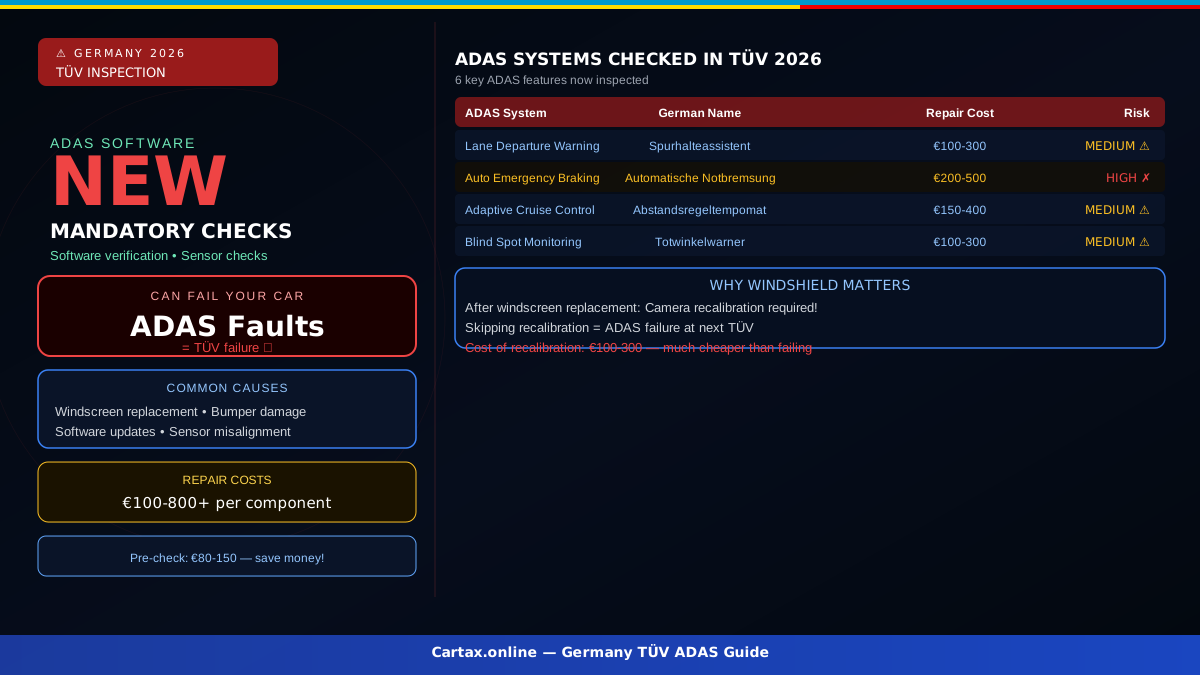
The German TÜV (Technischer Überwachungsverein) technical inspection has evolved significantly in 2026. What was once a straightforward check of brakes, lights, and emissions has expanded to include comprehensive software-level verification of Advanced Driver Assistance Systems (ADAS). For German car owners, this means that simply having a mechanically sound vehicle is no longer enough — your car's electronic safety systems must also be functioning perfectly.
What Changed in the TÜV Inspection for 2026
The integration of ADAS checks into the TÜV Hauptuntersuchung (HU) reflects the increasing complexity of modern vehicles. As ADAS features have become standard equipment across most new cars, regulators recognised that these systems are now critical safety components that require verification during inspection.
Why ADAS Checks Were Added
ADAS features have become central to vehicle safety:
- Proven effectiveness: Studies show ADAS can prevent up to 40% of accidents
- Widespread adoption: Most new cars sold in Germany now include multiple ADAS systems
- Software complexity: ADAS relies on cameras, radar, and complex algorithms that can fail
- Calibration sensitivity: Even minor sensor misalignment can render ADAS ineffective
The ADAS Systems Checked During TÜV
Primary ADAS Features Under Review
| ADAS System | German Name | Components | Common Failure Points |
|---|---|---|---|
| Lane Departure Warning | Spurhalteassistent | Camera, sensors | Camera miscalibration |
| Automatic Emergency Braking | Automatische Notbremsung | Radar, camera, ECU | Radar misalignment |
| Adaptive Cruise Control | Abstandsregeltempomat | Radar, speed sensors | Radar sensor damage |
| Traffic Sign Recognition | Verkehrszeichenerkennung | Front camera | Windscreen camera issues |
| Blind Spot Monitoring | Totwinkelwarner | Radar sensors, indicators | Sensor damage, wiring |
| Parking Assist | Einparkhilfe | Ultrasonic sensors, cameras | Sensor blockage, damage |
Common Reasons for ADAS-Related TÜV Failures
1. Windscreen Replacement
Perhaps the most common cause of ADAS failures is windscreen replacement. The forward-facing camera that supports lane departure warning, traffic sign recognition, and automatic emergency braking is typically mounted behind the windscreen. After a windscreen replacement, this camera must be recalibrated — a step that many vehicle owners overlook or skip to save costs.
2. Minor Accidents and Bumper Damage
Parking bumps, minor collisions, or even aggressive speed bump encounters can misalign radar sensors mounted in bumpers. These sensors are precisely positioned and even slight movement can affect their accuracy significantly.
3. Software Updates
Modern ADAS systems rely heavily on software. Incomplete or interrupted software updates can leave systems in a partially configured state, potentially triggering fault codes or reducing functionality.
4. Sensor Blockage
Dirt, ice, snow, or even accumulated grime on cameras and radar sensors can cause false readings or system shutdowns. Regular cleaning, especially before inspection, is essential.
How to Prepare Your Car for TÜV ADAS Checks
Before Your Appointment
- Check warning lights: Any ADAS warning light should be addressed before inspection
- Clean all sensors: Wash the car thoroughly, including cameras, radars, and ultrasonic sensors
- Verify recent work: If you've had windscreen replacement, bumper work, or any accident repair, confirm recalibration was completed
- Test ADAS functions: Briefly verify that lane departure warning activates, parking sensors beep, and adaptive cruise works
- Update software: Ensure any pending software updates from the manufacturer have been applied
Professional Preparation
Many German workshops offer pre-TÜV checks specifically focused on ADAS:
- Diagnostic scan: Full OBD-II/vehicle network scan to identify any fault codes
- System verification: Functional testing of each ADAS system
- Recalibration: Camera and radar recalibration if issues are found
- Cost: Pre-inspection check typically costs €80-150, significantly less than failing and requiring repairs
The Cost of ADAS-Related TÜV Failures
Repair Costs by Component
| Component | Repair Cost | Notes |
|---|---|---|
| Camera recalibration | €100-300 | After windscreen replacement |
| Radar recalibration | €150-400 | Front or rear radar |
| Sensor replacement | €200-800 | Depending on sensor type |
| Full ADAS diagnostic | €80-150 | Pre-inspection check |
| Software update/reprogramming | €100-300 | Dealer or specialist |
What Happens If Your Car Fails ADAS Checks
Failure Consequences
If your vehicle fails due to ADAS defects:
- Inspection report: You'll receive a detailed report listing all ADAS faults
- Repair requirement: All defects must be repaired before reinspection
- Reinspection fee: Typically 50-70% of original inspection fee
- Limited driving: You may continue driving if the inspection sticker hasn't expired, but should repair promptly
Major vs Minor Defects
ADAS faults are categorised by severity:
- Major defect: Critical safety system failure — automatic overall failure
- Minor defect: Non-critical system issue — may allow pass with warning
- Advisory: Recommendation for future attention, doesn't affect pass/fail
The Bottom Line
The 2026 TÜV inspection represents a significant shift toward recognising that modern vehicle safety extends beyond mechanical components. ADAS systems are now considered as critical as brakes and lights, and their proper function is essential for road safety.
For German car owners, the key actions are clear: maintain your ADAS systems proactively, always recalibrate after any work that might affect sensors, and consider a pre-inspection check before your TÜV appointment. The cost of prevention is far lower than the combined cost of failure, repairs, and reinspection.
Your car's electronic safety systems are there to protect you and other road users. Ensuring they function correctly isn't just about passing inspection — it's about being confident that your vehicle's safety systems will work when you need them most.