On 22 April 2026, electric vehicle adoption in the UK has reached record levels — yet the rules for road tax on EVs have changed more in the past 18 months than in the previous decade. The era of free road tax for electric cars ended on 1 April 2025. This guide explains exactly what EVs pay in road tax in 2026 and how the new rules affect both new buyers and existing EV owners.
The End of the EV Road Tax Exemption: What Changed
Electric vehicles in the UK previously enjoyed an exemption from Vehicle Exercise Duty (road tax) under rules introduced in 2005 to incentivise early EV adoption. For nearly 20 years, pure electric cars paid nothing in road tax regardless of their list price or age. This exemption ended on 1 April 2025.
The change was part of the government's broader fiscal adjustment as EV uptake increased and the revenue gap from lost fuel duty widened. The Autumn Budget 2024 confirmed the April 2025 start date, giving EV buyers and sellers time to prepare. The policy aims to create parity between electric and combustion-engine vehicles in terms of road tax contributions.
2026 EV Road Tax Rates: What You Pay
Under the current rules, road tax for electric vehicles registered from 1 April 2025 onwards is as follows:
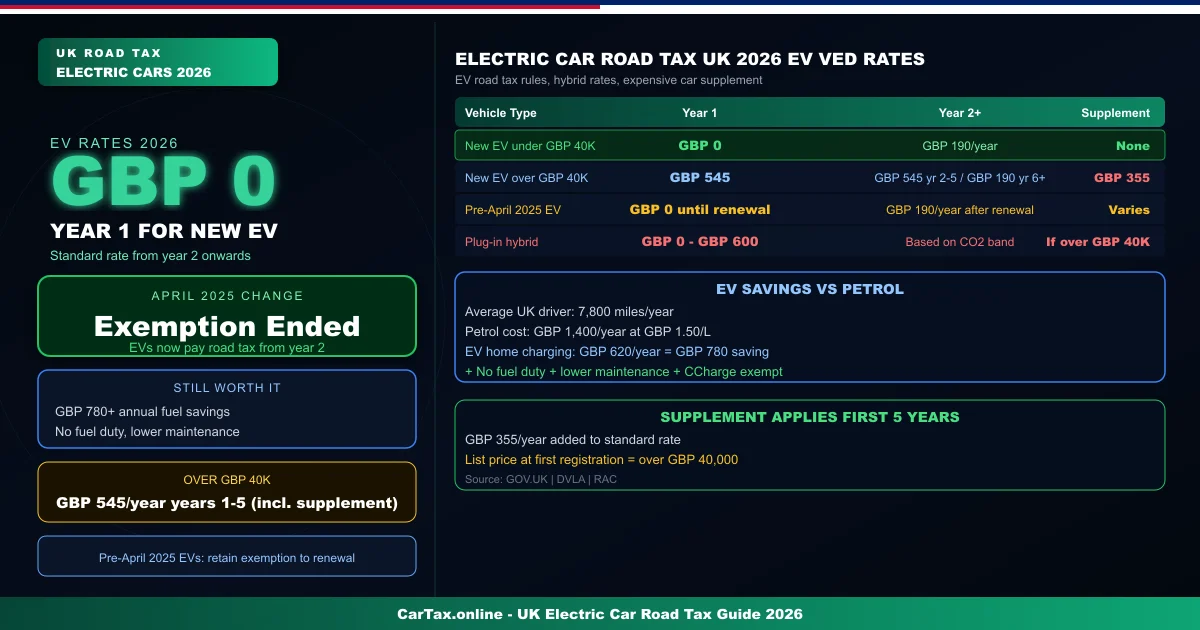
New EVs with list price under £40,000: £0 in year 1. From year 2 onwards: £190 per year (the standard rate).
New EVs with list price over £40,000: £545 in year 1 (the standard rate £190 plus the Expensive Car Supplement of £355). Years 2-5: £545 per year (standard rate plus supplement). Year 6 onwards: £190 per year (supplement no longer applies after 5 years).
These rates apply to pure electric vehicles (BEVs) — vehicles that run solely on battery power with zero tailpipe emissions.
Vehicles Registered Before April 2025
If you own an electric vehicle registered before 1 April 2025, the situation is slightly different. Vehicles that were already registered and benefiting from the EV exemption when it ended retain their exemption for their current tax period — essentially, they continue at £0 until their next renewal date falls after April 2025.
At the next renewal, these pre-April 2025 EVs will transition to the standard rate of £190 per year. The Expensive Car Supplement rules apply based on the vehicle's list price at the time of first registration — so a pre-April 2025 Tesla Model S that cost £70,000 will pay the supplement rate from its first renewal after April 2025.
For second-hand EV buyers, this means a pre-2025 EV may still be at £0 road tax for a period — but only until its renewal date. Always check the current road tax status and renewal date at gov.uk/check-vehicle-tax before purchasing.
Hybrids and Plug-In Hybrids: What They Pay
Hybrid vehicles and plug-in hybrids (PHEVs) have never qualified for the zero-rate EV exemption — they were always taxed at standard VED rates based on their CO2 emissions. In 2026, this means:
Most hybrid vehicles — those with CO2 emissions above 0g/km — pay the standard rate of £190 per year if their list price is under £40,000. The precise rate depends on CO2 emissions under the VED band system, which ranges from £0 for very low emitters to £600 per year for the highest-polluting vehicles.
Practical tip: many plug-in hybrids with official CO2 figures below 50g/km fall into the lowest VED bands and pay around £190 per year. But real-world fuel economy on PHEVs is often significantly worse than official figures, meaning actual CO2 emissions can be much higher in practice.
The Expensive Car Supplement Explained
The Expensive Car Supplement (formerly known as the Premium Rate supplement) adds £355 per year to the standard VED rate for vehicles with a list price over £40,000. It applies for the first 5 years of the vehicle's life from the date of first registration.
For a £50,000 electric SUV registered in 2026, the road tax calculation is:
- Year 1: £545 (£190 standard + £355 supplement)
- Year 2: £545
- Year 3: £545
- Year 4: £545
- Year 5: £545
- Year 6 onwards: £190 (supplement ends)
The list price used for the supplement calculation is the published list price of the vehicle when new — not the second-hand purchase price. A £60,000 EV purchased for £25,000 second-hand in 2031 still pays the supplement because it was £60,000 when first registered.
Are EVs Still Worth Buying Despite Road Tax?
Despite the end of the road tax exemption, electric vehicles remain substantially cheaper to own than petrol or diesel equivalents over a typical ownership period. The road tax saving versus a petrol car is at most £190 per year for a standard-rate EV — or £545 per year for an EV over £40,000 in years 1-5.
Against this:
- Fuel savings: average UK driver covers 7,800 miles per year. At current petrol prices of around £1.50 per litre and 40mpg economy, that costs approximately £1,400 per year in fuel. An EV doing the same mileage at home electricity rates of 28p/kWh and 3.5 miles per kWh costs approximately £620 per year — a saving of £780 per year.
- No fuel duty: petrol and diesel include 52p per litre in fuel duty. EVs pay nothing.
- Maintenance savings: EVs have no oil changes, no timing belts, fewer brake replacements (regenerative braking), and no exhaust system replacements. Typical annual maintenance saving versus a petrol car: £200-£400.
- London Congestion Charge: EV exemption runs until at least December 2025 — worth up to £2,400 per year for daily users.
The road tax change is real but modest. The £190 per year for a standard EV from year 2 is easily outweighed by fuel and maintenance savings that total over £1,000 per year for average UK drivers.
Summary: EV Road Tax in 2026
All electric vehicles registered from April 2025 onwards pay road tax. New EVs under £40,000 list price pay £0 in year 1, then £190 per year. EVs over £40,000 pay £545 per year for years 1-5, then £190 from year 6. Pre-April 2025 EVs retain their exemption until their first renewal after April 2025. Hybrids and PHEVs pay standard VED rates based on CO2 emissions. Despite these changes, EVs remain significantly cheaper to run than petrol or diesel vehicles over a typical ownership cycle.