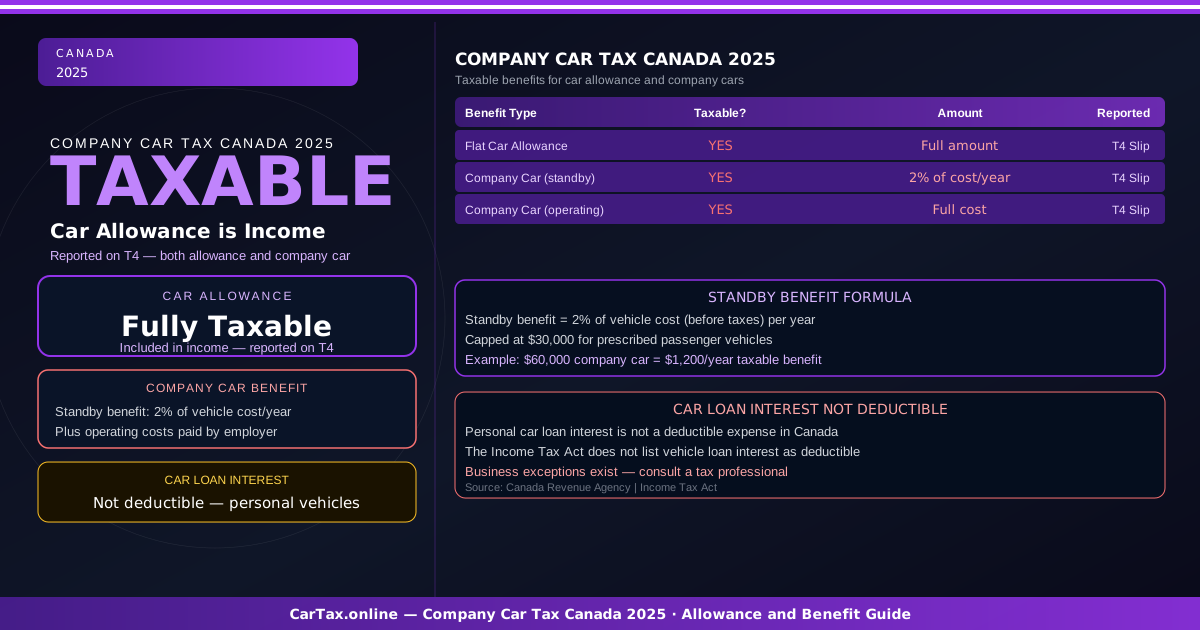
Company cars and car allowances are common employee benefits in Canada, and understanding how they are taxed is important for both employers and employees. Whether you receive a car as part of your compensation package or provide one to employees, the tax implications matter.
Is a Car Allowance Taxable Income in Canada?
Yes. A car allowance provided by an employer is generally considered a taxable benefit in Canada. Both the GST/HST paid on the benefit and the fair market value of the benefit must be included in the employees income.
For employers, car allowances paid to employees must be:
- Included in the employees T4 slip
- Subject to CPP contributions and EI premiums
- Have GST/HST collected on the taxable benefit portion where applicable
How Does a Company Car Affect Your Tax?
When an employer provides a company car for personal use, the employee must include a taxable benefit on their personal income tax return. The benefit is calculated based on:
- Standby benefit: The value of having the vehicle available for personal use
- Operating cost benefit: The cost of fuel and other operating expenses paid by the employer
Company Car Taxable Benefit — 2025
| Vehicle Cost | Standby Benefit Rate | Notes |
|---|---|---|
| Under $30,000 (before taxes) | 2% of cost per year | Plus operating costs if employer-paid |
| $30,000 - $34,999 | 2% of $30,000 = $600/year | Capped standby benefit |
| Over $34,999 (Class 1) | 2% of cost per year | No cap, higher income inclusion |
Can You Claim Car Loan Interest on Income Tax?
Generally no. Personal car loan interest is not deductible in Canada, even if you use the vehicle for business. The Income Tax Act does not list vehicle loan interest as a specifically deductible expense for personal-use vehicles.
Business exception: If you are self-employed and use your vehicle exclusively for business, some scenarios may allow interest deductions. However, CRA scrutinizes these claims carefully and requires substantial documentation.
Car Allowance vs Company Car
Car Allowance vs Company Car — Tax Impact
| Type | Taxable Benefit? | Employee Control |
|---|---|---|
| Flat car allowance | Yes — full amount | Employee chooses vehicle |
| Fixed reimbursement rate | Yes — taxable portion | Based on actual business use |
| Company-provided car | Yes — standby + operating | Employer maintains vehicle |
Tips for Employees with Company Cars
- Track personal vs business kilometres: Reducing personal use reduces the taxable benefit
- Negotiate a car allowance instead: A car allowance gives you more control and may be more tax-efficient depending on your situation
- Understand the operating benefit: If your employer pays for fuel and maintenance, this is an additional taxable benefit
- Review your T4 slip: Ensure the taxable benefit amount is correctly reported
Disclaimer: This article is for informational purposes only. Company car tax rules are complex. Consult a tax professional or your employer for specific guidance.