car tax refund selling car — Car Tax Refund When Selling Car Canada Overview
This guide covers car tax refund when selling car canada for vehicle owners and buyers in 2026 In 2026, car tax refund selling car . Tax rates, rules, and exemptions vary by province and vehicle type.
For more information, visit the Car Tax Calculator, Canada Car Tax Guide, Used Car Tax Guide.
car tax refund selling car — Car Tax Refund When Selling Car Canada Tax Rates and Calculations
Understanding car tax refund when selling car canada requires knowing the applicable tax rates and how they are calculated. Provincial taxes are applied at registration, while federal luxury taxes apply on high-value vehicles above $100,000.
car tax refund selling car — Car Tax Refund When Selling Car Canada Exemptions and Exceptions
Certain vehicle types, buyer categories, and purchase circumstances qualify for exemptions or reduced tax rates. High-GVWR vehicles, electric vehicles, and family transfers are among the common exemption categories.
For official information, visit SGI Saskatchewan, ICBC (Insurance Corporation of BC).
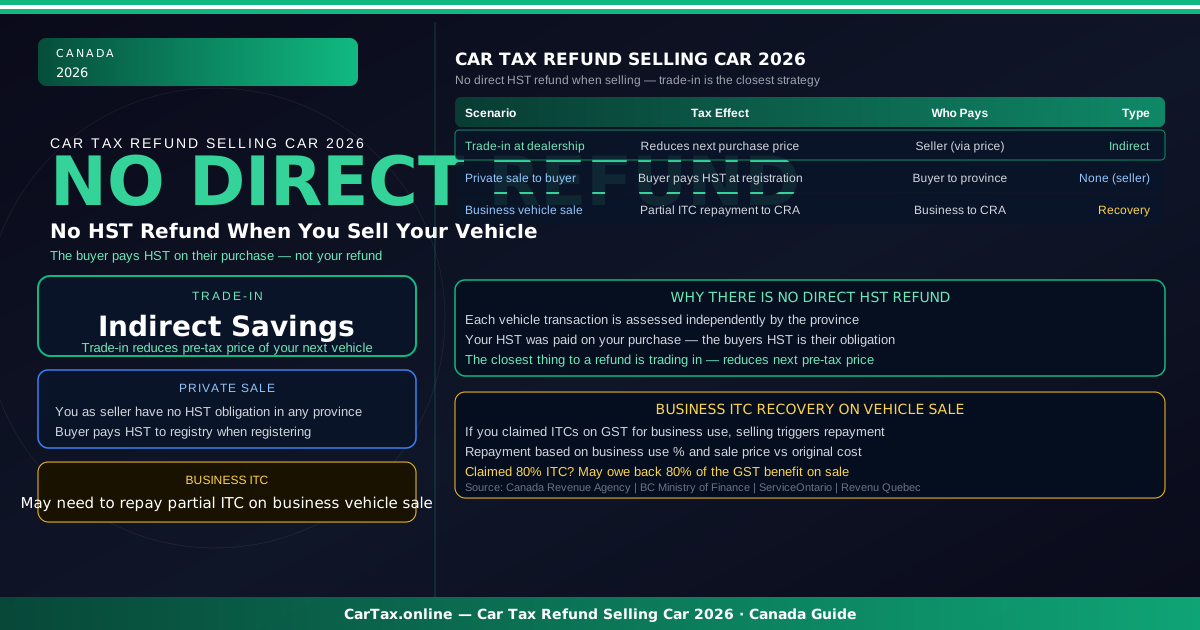
Car Tax Refund When Selling Car Canada 2026 When you sell a vehicle, the HST you've already paid doesn't simply transfer to the buyer — but there are legitimate ways to recover some of the tax burden when selling. Here's how it works across Canada. Understanding HST and Vehicle Sales When you bought your vehicle, HST was paid on the purchase price. When you sell it, the buyer pays HST on their purchase — not a refund of your original HST. There is no direct HST refund for selling a vehicle. The tax systems of all provinces treat each vehicle transaction independently. However, several scenarios allow for tax recovery: Trade-In at a Dealership When you trade in your vehicle to a dealership, the HST situation depends on whether you're buying a replacement vehicle: If buying a new vehicle from the same dealership: - The trade-in reduces your pre-tax purchase price - This reduces the HST you pay on the new vehicle - The HST "savings" from the trade-in is indirect — it's built into the reduced pre-tax price If selling to a dealership without buying: - The dealership pays you the trade-in value - No HST is involved in the payment to you - You don't receive an HST refund — the dealership may claim ITCs on the vehicle they purchase Private Sale Tax Responsibility In a private sale, you as the seller don't remit HST to the government. The buyer pays HST when they register the vehicle, based on their purchase price from you. If they buy below market value, their provincial registry may assess HST on the fair market value. As a seller, you have no HST obligation in a private transaction in any province. The tax relationship is between the buyer and the provincial registry. HST on Lease Termination If you're ending a vehicle lease early, the situation is different. Some lease agreements include a purchase option — if you buy the vehicle at the lease end, you may owe tax on the buyout amount. Conversely, if the leasing company sells the vehicle to a third party, HST is charged on that transaction. Business Vehicle Sales and ITC Recovery If you used a vehicle for business and claimed Input Tax Credits (ITCs) on the GST, selling the vehicle may trigger a partial ITC repayment. When a business vehicle that had ITCs claimed is sold, a portion of the claimed ITC may need to be repaid to CRA. The repayment is calculated based on the percentage of business use vs personal use recorded at the time of claiming, and the sale price relative to the original cost. Selling Below Fair Market Value If you sell a vehicle to a family member or friend for significantly below market value, the buyer's provincial registry may assess HST based on the fair market value rather than the purchase price. This protects the revenue base — it prevents price understating between related parties. From the seller's perspective, this doesn't create a tax liability, but it does mean the buyer pays more HST than they might have expected. Refund vs Credit: The Distinction Vehicle tax refunds don't exist in the traditional sense for private sellers. What you receive from selling a vehicle is the sale proceeds — the buyer bears the tax burden on their registration, not you. The tax you "recover" when selling comes through: - Higher sale price reflecting the vehicle's value (not a tax refund) - Trade-in reduction on your next vehicle's pre-tax price (not a separate refund) - Business ITC adjustments (claimed through CRA on GST returns) Provincial Variations In provinces without provincial sales tax (Alberta), there's no provincial component to worry about. In HST provinces, each transaction is assessed independently. BC's PST on private sales is paid by the buyer at Autoplan — not deducted from the seller's proceeds. Key Takeaways There is no direct HST or PST refund when selling your car. The buyer pays the applicable tax when they register the vehicle. Trading in at a dealership indirectly reduces tax on your next purchase by lowering the pre-tax price. Business sellers may need to repay a portion of previously claimed ITCs through CRA. Private sellers bear no tax obligation — the tax relationship is between the buyer and the province. Sources: Canada Revenue Agency | BC Ministry of Finance | ServiceOntario | Revenu Quebec