Car Tax Import Duty Canada Overview
This guide covers car tax import duty canada for vehicle owners and buyers in 2026. Tax rates, rules, and exemptions vary by province and vehicle type.
For more information, visit the Car Tax Payment Guide, Car Tax Calculator.
Car Tax Import Duty Canada Tax Rates and Calculations
Understanding car tax import duty canada requires knowing the applicable tax rates and how they are calculated. Provincial taxes are applied at registration, while federal luxury taxes apply on high-value vehicles above $100,000.
Car Tax Import Duty Canada Exemptions and Exceptions
Certain vehicle types, buyer categories, and purchase circumstances qualify for exemptions or reduced tax rates. High-GVWR vehicles, electric vehicles, and family transfers are among the common exemption categories.
For official information, visit SGI Saskatchewan, Revenue Canada Luxury Tax.
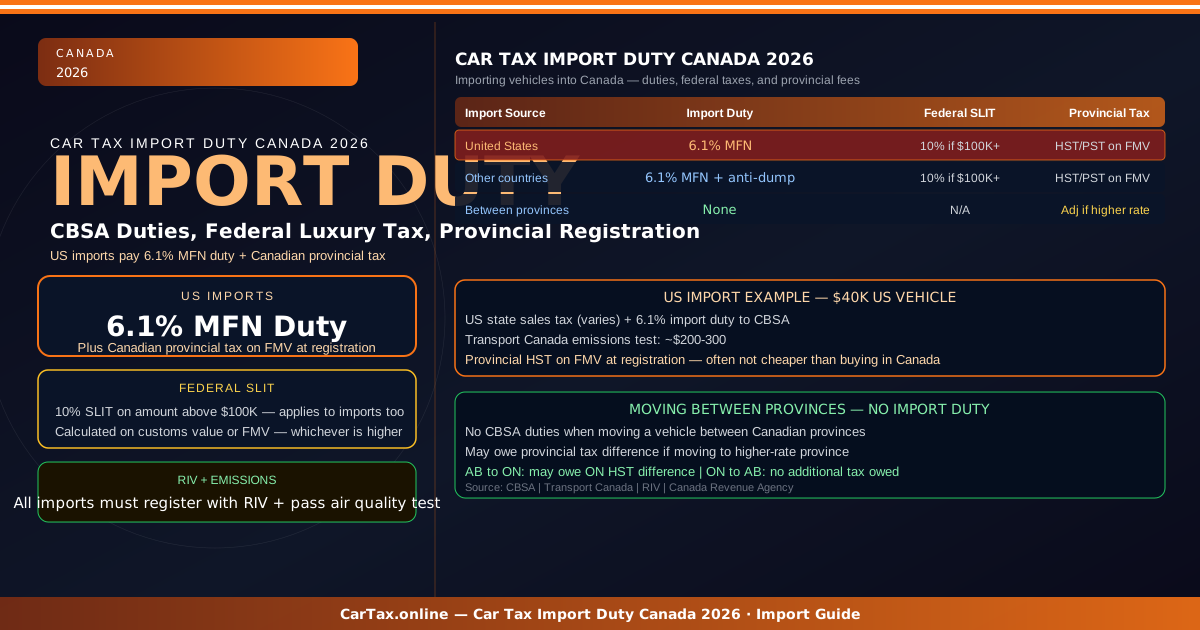
Car Tax Import Duty Canada 2026 Importing a vehicle into Canada involves federal import duties, federal luxury taxes, and provincial registration taxes. The rules depend on whether you're importing from the US, from another country, or moving from one Canadian province to another. Importing from the United States When importing a US-purchased vehicle into Canada, you deal with the Canada Border Services Agency (CBSA). The key taxes and duties that apply: Import Duty — Most US vehicles enter Canada at 6.1% MFN (Most Favoured Nation) tariff rate under the USMCA. Pickup trucks and some other vehicle categories may have lower or zero tariffs. The duty is calculated on the vehicle's customs value. Air Quality Emissions Assessment — Transport Canada requires all imported vehicles to pass an air quality emissions assessment. This costs approximately $200-$300 and is mandatory before the vehicle can be registered in Canada. Federal Luxury Tax — If the vehicle's value is $100,000 or more, the federal 10% Select Luxury Items Tax (SLIT) applies on the amount above $100,000, in addition to any import duty. Provincial Tax — Once cleared by CBSA, you register the vehicle in your province and pay the applicable provincial tax (HST, GST+PST, or QST) on the vehicle's fair market value at the time of import. This is the same provincial tax you would pay on a domestic purchase. Provincial Registration Fee — Separate annual registration fees apply after provincial registration. Importing from Other Countries Vehicles imported from countries outside the US (Europe, Japan, etc.) are subject to: - Import duty at the MFN rate (typically 6.1% for passenger vehicles) - Anti-dumping duties if applicable - Federal SLIT if over $100,000 - Provincial tax at registration - Transport Canada air quality assessment Japanese-import vehicles are popular in Canada, particularly for enthusiasts. They must meet Canadian safety and emissions standards, which can require significant modifications. Budget for potential compliance costs of $5,000-$15,000 for JDM (Japanese Domestic Market) vehicles. Moving Between Canadian Provinces If you're moving to a new province with a vehicle already registered in your current province, you do not pay import duties or federal luxury taxes. You pay the provincial tax difference if your new province has a higher rate. For example, moving from Alberta (5% GST) to Ontario (13% HST) with a vehicle: you may need to pay the difference in provincial tax. Contact your new provincial registry within the required timeframe (typically 30-90 days) to understand your obligations. Moving from Ontario (13%) to Alberta (5%): no additional provincial tax is owed. Alberta has no provincial sales tax. US Vehicle Import Scenarios Buying a car in the US and driving it to Canada: - Pay US sales tax in the state of purchase (varies by state, 0-10%) - Pay import duty to CBSA at the border (6.1% MFN for most vehicles) - Pay Transport Canada emissions test (~$200-300) - Pay federal SLIT if over $100,000 - Pay provincial tax in your province of registration The total additional cost of importing from the US compared to buying domestically is the import duty plus the emissions compliance costs. In many cases, after accounting for US state sales taxes, import duties, and compliance, importing from the US is not significantly cheaper than buying in Canada. RIV Registration for Imported Vehicles The Registrar of Imported Vehicles (RIV) is Transport Canada's program for bringing foreign vehicles into Canada. All imported vehicles must be registered with the RIV and pass a compliance inspection at an approved facility. The RIV process adds administrative steps but is straightforward. Vehicles must be imported within 15 years of the model year for most categories. Key Takeaways US imports pay 6.1% import duty plus Canadian provincial tax on fair market value. The federal 10% SLIT applies to imports over $100,000. All foreign imports must pass Transport Canada's air quality emissions test. Moving between Canadian provinces triggers provincial tax adjustments but no federal import duties. The total cost of importing often doesn't save money after accounting for duties, compliance, and US state taxes. Sources: CBSA | Transport Canada | RIV | Canada Revenue Agency